Showing posts with label Chicago Crime. Show all posts

Wednesday, October 4, 2023

New Chicago Police Chief Larry Snelling's challenges

A popular advertising slogan in the 1960s and 70s was that “sex sells”, as voluptuous female models cavorted across double spread magazine ads, purring with delight over a range of products from cologne to cars, and even designer jeans. Now, over 50 plus years later, in a politically divided country, crime sells, especially in the nation’s largest metropolitan areas, such as New York, Chicago and Los Angeles, where many a dollar is earned in the media as crime headlines blare danger lurking on practically every corner. 

There are real numbers behind those headlines, and crime nationwide has increased, and is of grave concern to residents and lawmakers alike.  The words “law and order” might seem benign enough but they have also been a dog whistle to white voters in majority Black urban areas, and that fear, followed by panic, has fueled a narrative designed to not just make media bucks, but also to score votes among the electorate, and especially, but not wholly, on the local level.


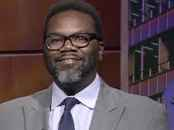
This was especially seen in the recent mayoral election in Chicago between the “tough on crime” candidate Paul Vallas and his progressive opponent Brandon Johnson; and, then adding race to the mix, with Vallas white, and Johnson Black; the result was a mixture of racial politics designed to not only appeal to each other’s political base, but also to voters in this long segregated city.


The win by Johnson has galvanized the political and racial rhetoric of the city, even weeks after he was sworn in, with many white residents claiming that he was “no good”, a mere pawn of his former employer, the Chicago Teachers Union, and other unprintable names, the kindest being that he was a socialist.


Johnson’s latest, and most targeted, appointment is Larry Snelling as Chicago Police Superintendent to replace former Mayor Lori Lightfoot’s chief, David Brown, who faced a barrage of criticism, from all sides, after a series of missteps that cost her, and him, national negative headlines, (including her primary loss, and his subsequent resignation) as the city’s crime rate soared, especially after the looting following the death of George Floyd, when after peaceful demonstrators went home a rag tag force of looters swarmed downtown shops on posh Michigan Avenue, as well as State Street.


Snelling who has garnered rave reviews from within the force as well as without, was confirmed by the Chicago City Council in a 48 to 0 vote, and the 54 year old Chicago native earned a strong approval rating during the NATO meeting in 2012 when world leaders gathered in the city among a swarm of protestors, and news cameras, anxious to catch any disturbance of the meeting. By all accounts Snelling coordinated the security efforts with the Secret Service to great acclaim.


That success behind him, he has promised to make accountability his watchword for police actions, and to be fair in its application, and after being sworn in he told those gathered in the hall, “Anybody will tell you this. I hold officers accountable. [B]ut when our officers are held accountable, they have to be held accountable fairly.”


Snelling also said that he needed the public to understand that police officers often face dangerous situations, and, in that vein, to judge them fairly. He asked listeners to imagine, “five, six officers in the middle of a crowd who want to hurt you, and you’re outnumbered 100 to 5, you don’t really know what that feels like.”


Chicago crime was once primarily seen in Black and brown neighborhoods on the West and South Sides, has now spread to the more affluent areas Lincoln Park, Lakeview, and River North, where armed gangs, using stolen cars, suddenly appear to rob citizens walking their dogs, going to and from work, or exiting their vehicles. 


Subsequent resident fears have notably enlarged the racial rhetoric, and on X, formerly known as Twitter, those fears have reached a fever pitch, fueling an already heated atmosphere.


The Chicago Police Department, for the month of August of 2023 reported that murders decreased to 37 percent; criminal sexual assault increased by 35 percent; non violent thefts increased to 29 percent, with year to date murders reaching 26 percent; and robberies to 20 percent, and motor vehicle theft, to 22.8 percent.


Perception, as many a sage has said, is one tenth of the law, and local media, the Chicago Tribune, as well as the Chicago Sun Times, and especially CWBC Chicago have given priority to crime news, but often do not show that other large American cities face the same dilemma, and many residents are led to feel as if their city is the only one traumatized by crime.


Looking at those other cities, The New York Times recently reported that other large cities have seen their largest increases "in modern life." but while some readers might have considered this hyperbole, the stats do show that violent crime is still higher than before the Covid pandemic, said the nonprofit Center on Criminal Justice, showing that Chicago joins Los Angeles, New York, Philadelphia and Denver in increased rates.


There are exceptions: in the first half of 2023 there were fewer homicides, across the nation, a 9 percent drop, and assaults have also dropped to 5.6 percent in the ten cities that the Council examined.


The Brookings Institute has noted that “while stoking fears on crime is an age-old American election tactic, something feels different about its salience in the pandemic era landscape. Faced with slow recovering urban cores,” there is a redeployment of crime “as the primary cause of a host of complex and interconnected issues,” be they pandemic office closures, general mayhem, or fear itself.


Ken Griffin, CEO of Citadel, seemed to have hit the accelerator when he moved headquarters from downtown Chicago to Miami, followed by Boeing, Inc., moving its headquarters to Texas from the nearby suburb of Deerfield. While these moves are a “fraction of Chicago’s 1.3 million jobs, the fact that it happened scored national headlines, reported Bloomberg in September 2022.


Rebranding, as well as reallocation, will be a monumental task for the new chief, as he faces the hot lights of the media, as well as those social media voices.


Brookings did say that the perception of crime was a major concern and fear in downtown areas was growing, their qualitative analysis of Chicago, Philadelphia, New York and Seattle., not helped by “high profile incidents of violence that occurred downtown as exacerbating factors.”


These incidents notwithstanding the study also told only one part of the story, and while “Respondents overall perceptions of rising crime were not wholly unfounded, but they tended to reflect national and citywide crime rhetoric and sensationalized media coverage rather than understanding of where and how crime actually occurs within their cities.”


Notably for Chicago, the Brookings staff found that in 2019 and 2022, “there was a 48% increase in property crimes in Chicago” and similar increases in other cities, Philadelphia, New York and Seattle, but ”downtown Chicago accounted for just 6% of the citywide increase in property crime and less than 1% of the citywide increase in violent crime.”


Likewise a small change in downtown crime can have an outsized public perception.


A significant impact on public perception is that of burgeoning retail crime, but history has shown that surges are not unique to this time, and while political conservatives and liberals disagree on what measures should be taken: tougher sentencing, versus, addressing poverty, investment in poorer areas, or tougher sentencing, among other steps, the numbers that we see may not always be accurate.


As Yahoo News pointed out in August, “Skeptics say there’s strong reason to doubt that the supposed shoplifting surge is even real. They point out that the only data to support the idea comes from retailers themselves, who have a strong financial incentive to blame underperformance on theft rather than mismanagement or poor business strategy.”


Taking another look at retail crime that has plagued cities like Chicago, and other cities is this from themessenger.com: “. . .  solid figures are elusive, and a lack of good data isn’t just a headache for statisticians. Information scarcity means misdiagnosis of the problem and misallocation of resources, experts say.”


“For example, if a store owner mistakenly believes shrink is the result of theft when the real issue is a delivery problem, they might squander money on extra security when a stern conversation with a supplier is the more constructive solution, experts say.”  And, add employee theft, and a misreporting of smash and grab type robberies, after hours, which are often mistakenly recorded as shoplifting not the robberies that they are.


It’s going to be a tough haul for Snelling, and it will take his legendary humility, skill, and patience to conquer both the perception and the reality of crime in Chicago..


Monday, February 27, 2023

Chicago mayoral election showdown is here


Tuesday is Chicago’s municipal election day, and at the top of the ticket is the run for mayor, and this top job is in the minds of most voters, especially with the incumbent Lori Lightfoot facing a field of eight other candidates, and while many polls have zigged and zagged depending on the day, most residents are feeling that with this many candidates there is the definite possibility of a runoff election in April; and as dictated by law, if no candidate gets more than 50 percent of the vote, a runoff is automatically triggered.

Lightfoot has become wildly unpopular with many residents in her weakened efforts to battle crime, with criticism from both conservatives and progressives, whether it was dealing with the pandemic and covid restrictions (closing gyms, and other recreational facilities) earned her the enmity of some business owners, who eventually flouted mask rules and capacity limitations,


She has received the most criticism towards the increase in violent crime, that included street robberies, car jackings, and most of all, regular violence on the city’s famous El trains, the Red Line, in particular, where robberies, stabbings, beatings and other violent forms of assault became the norm.


Lightfoot’s hand picked police department chief David Brown, has been criticized for a lackluster response since his early days when the city dealt with protestors that tagged onto the peaceful demonstrations, and posh Michigan Avenue stores were looted, often in full sight of the police and television cameras.


Crime has become the central issue for most voters and there is frustration from many quarters, not only on the uneven response, but, as Live Free Chicago noted, the clearance rate for solving crimes by police is 21.7 percent in Black neighborhoods, and 45.6 percent in white areas.


Chicago public schools have also raised ire, and concern, by many who see decreased enrollment but greater demands for money, and in some cases new school buildings.


The mayor from her early days in office has battled the powerful Chicago Teachers Union, in what could be frankly seen as a mortal combat, and in fact one recent school superintdent quit, in virtual disgust at her dealings with CTU.


These two issues have become paramount in the minds of voters along with twinned issues of  police accountability, with the most glaring news of a policeman who was part of the Jan.6th Capitol insurrection, as a member of the now infamous Proud Boys, but who was only given a suspension by Brown; and joined by reports that both elementary and high school students not being able to read, or do math, at grade levels.


Lightfoots closest rival is Paul Vallas, a former CPS head, who some say “messed” up the schools, only to flee the city. He has garnered significant support from the Fraternal Order of Police, and he is running on a strict law and order platform, but his association with that organization and especially John Catanzarra, a former chief who has made questionable comments that some listeners associated with racism, while others praised him a voice for the police, and many residents, wrongfully have said that the mayor wants to defund the police, but in fact has given them the highest raise of many of her predecessors, but this seems as the saying says, all is fair in love and war, and this seems to be war.


Vallas has made questionable remarks in the past, many recorded, on whether he is truly a Democrat, or a Republican, with past statements saying he would run as a Republican in this blue city, after a previous loss as mayor.


As the only white candidate in a long segregated city, he has also earned the support of traditional white ethnic communities such as the Irish, Polish and German, and the somewhat relatively unknown, but powerful Greek American community, of which he is a member.


This pits him against the Black communities as they have faced a long history of police brutality under former Chicago Police Department Commander John Burch, who coordinated tortures of Black male prisoners, and the later shooting of Laquan McDonald in 2014, by CDP officer Jason Van Dyke.


Race is never far from the surface in American life, and running against a Black woman, as the only white candidate, makes many Black voters wary and his statements about taking the city back caused Lightfoot to say that he was “blowing the ultimate dog whistle, saying: “Take our city back, meaning what? To what time? And take our city back from whom?”


She also referenced Republican Bernie Epton who ran against Harold Washington, the city’s first Black mayor, in 1983, in a volatile racially tinged election, on a slogan of: “Vote for Epton before it is too late.”


Progressives have railed against his anti abortion stance, which he says is personal, and based on his Greek Orthodox faith, and previous statements about the teaching of Black history, that he conflates with Critical Race Theory, which is not taught in elementary and high schools. 


Next up as a top contender is former Cook County Commissioner, and member of Congress, Jesus “Chuy” Garcia, whose late entry into the race caused some consternation among local political observers.


While long considered the favorite of the CTU they abandoned their support, and while he did gain support from other elected officials, such as Jan Schakowsy,and Mike Quigley, both members of Congress, and some local trade unions including Teamsters 705, and 727, but the plum endorsement evaporated, and critics said he seemed more like Lightfoot, the death knell for the undecided which are currently 19 percent.


Veteran political speechwriter Jason DeSanto told local PBS station, WTTW, that in addition to late TV ads, and a weakened position that he “had a muddled message,” and that his strong base of support was among the Latino community, “But he really has not done a very good job of expanding beyond that base and really articulating a clear message as to what he stands for with respect to other communities.”


His early repeated references to working with Harold Washington have all but disappeared after a press release questioned the relationship, without specifically naming Garcia.


Surging in the polls is Cook County Commissioner Brandon Johnson, whose youth and creative positions on crime, police accountability, and education (as a former teacher) has galvanized Black voters and has resulted in Lightfoot saying that she is the only candidate of choice for Black residents, and has accused, Johnson, falsely, of wanting to defund the police.


What he wants to do is take some of the money from the police budget to harness violence prevention and social services to the South and West sides. And, he has spoken of his lived experiences, as a Black man living on the West Side, facing the issues that many of his constituents have.


Blacks make up 29 percent of the total population of Chicago.


David Axelrod, political analyst, who propelled Barack Obama to the presidency has told the Sun Times that Lightfoot has a “steep, steep hill to climb” and that the two top contenders could be Vallas and Johnson, and that the latter coming from the position of being an unknown would be a significant push aided by his “big personality.”


A recent poll by M3 Strategies had Vallas at 32 percent, and Johnson at 18 percent and growing, but that is changing, but beyond the polls the confluence of crime, and weakened public education are primary and who can show they have the grasp of those vital issues is the winner.


Wednesday, August 24, 2022

Chicagoland police face a summer of discontent


It’s been a controversial summer for Chicagoland police as they face intensive scrutiny for controversial behaviors, firings and shootings, and controlling crime across the metropolitan area, especially on Chicago's fabled El trains, and the firing of Robert Boik, Chicago Police Department, executive director of constitutional policing and reform, which sent shockwaves through the law enforcement community.

The late July detention and beating of a young Palestinian American boy seemed to be the catalyst for yet another charge of police brutality by police in Palos Hills, Illinois as they stopped a car without a front license plate and the aroma of cannabis. While one of the teens cooperated with the search, another 17-year-old Hadi Abuatelah, by Oak Lawn police, allegedly beat him ten times on his shoulders, and also a fractured pelvis and intracranial bleeding among other injuries.


Police have not released the body camera film, but a passerby recorded the incident on her cell phone, in a one minute footage, that also prompted cries of outrage against excessive force on the teen who appeared to weigh 120 pounds. 


Newsweek reported that the police claim there was no bodycam video, and since the recording only shows the beating, there remain many unanswered questions.


The Council on American-Islamic Relations-Chicago has joined with Abuatelah's family and has “filed a civil rights lawsuit against the officers and the village, alleging police used excessive force and the officers and department engaged in “racially motivated conspiracy” to deprive the teen of his civil rights,” reported Suburbanchicagoland.com.


An assault gun was found at the scene and there was suspicion that the teen had it in his accessories bag, slung over his shoulder.  One report described the weapon as “a Raven Arms P2 25 25 Caliber Semi Automatic weapon with three rounds of ammunition and a THC Vape cartridge which he later admitted to smoking.”


According to the police statements.after he was captured, Abuatelah tried to keep the bag throughout the incident,


"Regardless of the alleged infraction that led to the arrest, the video clearly shows a restrained teenager in submission, not resisting, being brutally beaten by three officers without justification," Council on American Islamic Relations Chicago Executive Director Ahmed Rehab said.


Oaklawn police say that they are conducting their own internal investigation.


According to The New York Times, “Zaid Abdallah, the boy’s lawyer, said that Hadi was a passenger in the vehicle. The lawyer said he did not know what the traffic stop was about or why Hadi had decided to flee.”


Oak Lawn police Chief Daniel Vittorio claimed the officers “feared Abuatelah was reaching for a weapon, and used management ways to launch the teen’s arms.”


“You have him subdued,” he said. “If he broke the law, we have a process for that in America. You arrest the person. He goes to bond court. He goes to his preliminary hearing. He goes to trial court. This is the process. The process is not smash his head into the pavement.”


“Regardless of the alleged infraction that led to the arrest, the video clearly shows a restrained teenager in submission, not resisting, being brutally beaten by three officers without justification,” Ahmed Rehab, executive director of CAIR-Chicago, said in a statement. “The issue here is excessive force and police brutality. Something we are seeing again and again and again.”


There are also claims that the teen was tased.


Claims of ongoing racism in this community have acerbated reactions, with the largest community of Palestinians and Palestinian Americans in the country, displaced from the West Bank after Israeli occupation.


In a statement from the AAAN, they said, “In addition to the demand that the three Oak Lawn police officers be fired, the AAAN has also been pressing Cook County State's Attorney Kim Foxx nonstop for over two weeks to drop the charges against Hadi and instead charge the officers who viciously beat him.”


The next court date is Aug. 25.


Internally, a dust up between CPD Chief David Brown and Robert Boik, erupted after the latter insisted on the terms of the Consent Decree with the Federal government that was made in the twilight of the Obama Administration.


Boik had learned that there were 46 officers that had to be sent back to patrol duties, instead of the required in-service training mandated by the terms of the decree, reported The Chicago Tribune.


“In Boik’s email, which was obtained by the Tribune, he said that if those individuals were moved to patrol, there would be 21 fewer instructors at the academy and the department would no longer be able to offer an eight-hour gender-based violence course to officers this year.”


Furthermore, “The decision would also result in 10 fewer people in the crisis intervention training program, which would diminish the program by about 30%, according to the email. Putting these individuals on patrol would also put a minimum of 8% of the department’s current consent-decree compliance at risk.


“Beyond the consent decree requirement to train our frontline officers, we have a fundamental obligation to ensure all our officers are provided with equal tools to do their jobs in the field. With the proposed cuts, every single officer will fall short of 40 hours of training this year,” Boik wrote in the email.”


The back and forth continued with Brown wanting to address city wide violence and Boik countering that his “email suggested that his staff would be moving to districts all over the city and “therefore will likely have minimal impact on patrol capacity for any one district.”


Praise and disappointment, at the decision, overflowed local media with the Tribune saying, “Arne Duncan, a managing partner of Emerson Collective and the founder of violence prevention organization Chicago CRED, wrote in a statement: “Bob Boik was fired for blowing the whistle and telling the truth — that he has no support and that the administration is not serious about police reform. Trust between the police and community is already far too low, and losing him is a big step in the wrong direction. That is dangerous for our city, for the community and for our police officers.”

There seems to be a pattern arising, and “Chad Williams, the former civilian commanding officer of the Police Department’s audit division, resigned in 2021 after emailing Mayor Lori Lightfoot to say he had been proud to lead the unit but had become disillusioned and was resigning his post.

“Unfortunately, my disappointment with the inability of this department’s top leadership to even feign interest in pursuing reform in a meaningful manner has made it impossible for me to remain involved,” Williams wrote in the email, as previously reported by the Tribune. “

Of the most pressing problems for Chicago is crime, rampant crime with carjacking's, robbery, theft and personal assault. Mayor Lightfoot, placed on the hot seat, has said that there have been improvements and that murders and shootings are down,16 and 18 percent, at the close of the 32nd week of 2022, yet some including Wirepoints and WBBM suggest that those numbers fail to include the baseline year of 2019, just before the Covid pandemic and the murder of George Floyd, the reaction of illegitimate protestors, and those that tagged along to loot and rob.

If that is taken into account, they say, then the numbers look worse, 31 and 33 percent respectively, yet that aside, the public perception that the city is not safe is dominant across the dinner tables and boardrooms of the city, and some companies have left the city such as Ken Griffin’s Citadel to Miami.

WBBM reported that “Lightfoot said her administration’s efforts are bearing fruit, including an 18% drop in homicides over last year.

“But when told many residents still don’t feel safe, she fired back:

“The perception, if it’s not accurately reported by the media, will continue to fuel a feeling that the entire city isn’t safe,” Lightfoot said. “It is important for our residents to know that we have a plan that we have implemented that is showing progress. And it’s critical that the media report that.”

She conceded that a lack of accountability for people who commit gun crimes has also led to more perpetrators feeling bolder about using violence”

The problem is that the plan has not been seen. And, on the city’s iconic El subway system, especially the Red Line, crime is rampant and there have been well documented reports in the media of people with bloodied faces, and passengers fending off gangs with their own weapons, and knives, often resulting in loss of life on both sides.

The police force assigned to the CTA has been reduced and there are concerns in some quarters of over policing that might result in racial profiling, but the volunteer force, and hired guards with dogs, have been mainly used to remove the unhoused, as they seek shelter on trains and buses.

Police have pointed to low ridership, due to Coviid, as being less of a deterrent to crime, but statistics cited are often inconsistent, and the use of the crime database was called, “tricky for all but the most hardcore data nerds to use, said Wirepoints.

There have been long standing issues with crime on CTA trains, for years, but now it has also spread to buses, where last summer, a man riding in broad daylight on a bus, in the River North area, (a gentrified neighborhood), was stabbed by a woman, later determined to be mentally ill.


In May, the situation intensified to the point where Sen. Dick Durbin (D) of Illinois and US Rep Jesus “Chuy” Garcia wrote a letter to the CTA, and they said, in part:


“While we appreciate the efforts that both the CTA and Chicago Police Department recently have made to increase passenger and employee safety on trains and buses throughout the CTA’s network, more needs to be done to protect CTA’s frontline workers and passengers given the alarming increase in crime on the CTA system,”


A local station, ABC 7, reported their response, "saying the safety and security of CTA customers and employees is its number one priority,” that many viewers felt was inadequate, as well as evasive.


.


Wednesday, July 13, 2022

Chicago mayoral candidates prepare for a slugfest

With the dust blown from the Illinois primary, all eyes, are looking ahead to the 2023 mayoral primary and who can lead Chicago for the next four years; and, already the candidate field is getting crowded, with former candidates, some who feel that the third time might be the charm to take a job that is often akin to mudslinging, muckraking and misjudgments.

The present incumbent, Mayor Lori Lightfoot, who ran as a populist reformer outside of traditional Chicago machine politics, has quickly became a near insider; an unexpected move that took many by surprise, and perhaps even herself, as she roared into office, on a white horse, pennants flying, only to find her ideals trampled into running a toddling town that can become a many headed hydra.


With reversals on an elected school board, a hard kick to aldermanic prerogatives, and a less than stellar record with the city council, including some teeth baring encounters with members has given her a a tough lady rep, in an even  tougher town.


A look in the rearview mirror shows that this has been seen before in City Hall with her predecessor, Rahm Emanuel, who was no shrinking violet, and who came to office with the rumor of sending a dead fish to a political enemy, and a string of bruising encounters from the Obama White House, where he served as chief of staff.


It’s now a safe bet that Lightfoot could not make peanut butter sandwiches without criticism from all sides: from the left, there was not enough butter, from the right there was too much and from the independents, that it was not organic.


Her chief nemesis has been Ray Lopez 15th Ward alderman, a candidate as early as April, who has been an outspoken critic, especially in the area of public safety, as Chicago has descended into a violent quagmire with car jackings, robberies, and retail thefts, often by gangs, sometimes even aided by pre-teens.


Now Lopez has rescinded his candidacy, stating that the growing field might lead to a runoff vote that might entrench Lightfoot as mayor, and on Twitter he posted a warning that with “With every new challenger that enters the race, the odds of Lori Lightfoot making it into a runoff, possibly even winning reelection, grows,” and added “Chicago has survived many things over its existence, but it will not survive another four years with this mayor chasing headlines to cover up her nonstop bouncing from bad decision to bad decision.”

Previously, he had said, “As mayor, my core principles will be simple: focus on safely rebuilding our economy and supporting our first responders and city employees that serve the taxpayers of Chicago.”


Block Club Chicago has also noted that “Lopez has a reputation on City Council for being one of the most conservative members, particularly on crime.”


While continuing to run for election as alderman in the 15th ward, his withdrawal has also generated some blowback, from contender Victoria Alvarez whose campaign team issued a statement, just before Thanksgiving, which said, in part, "As a candidate, Raymond Lopez declared he was “all in” on his mayoral bid - but now he is changing his tune. Seeing an uphill battle for the mayor’s office, he has decided to return to the 15th Ward he has neglected and now claims to speak for every resident.

Aldermanic candidate, Victoria “Vicko” Alvarez, rejects his oversimplifications and lack of civic imagination. Vicko gathered more than three times the required amount of signatures by knocking doors in every neighborhood of the 15th Ward."


Another familiar face to locals has been Paul Vallas who was CEO of Chicago Public Schools, from 1995 to 2000, and while with failed prior attempts to win the top job, he has also leaned hard into the crime problem, and has tweeted on several of the more alarming incidents bemoaning the lack of a comprehensive plan by Lightfoot.


An avuncular figure Vallas has been down this road before, and has also railed against high taxes, as well as crime, and, will undoubtedly be seen favorable by the Chicago Teachers Union whose teeth marks can still be found in Lightfoot’s arm as she dealt with the powerful union, in her first month in office; as she fought a public battle with the union.


That was then, and now we have Brandon Johnson a former teacher who has received the endowment of the CTU, as well as the Service Employees International Union, two powerful voice in local politics and whose support puts him in the first slot for attention.


Crime is the key blow against Lightfoot and Vallas like others has also said that he would fire Chicago Police Superintendent, David Brown, Lightfoot’s handpicked police chief who in his early days showed, to some, a naivety, especially in the aftermath of the riots that piggybacked onto the peaceful protests that followed the murder of George Floyd.


His track record is not bright and as Block Club Chicago reported, “In the 2019 mayoral race, Vallas got 5 percent of the vote. He also unsuccessfully ran for Illinois governor in 2002 and lieutenant governor in 2014 with then-Gov. Pat Quinn.”


Taking tack for a candidacy is State Rep Kam Buckner, a spry 37 year old whose diverse 26th District looks like Chicago he has stated, ““The district looks a lot like Chicago,” Buckner said. “… Being in that role has been incredibly telling to me. It’s given me a very clear view into what happens when we have a tale of two cities — what happens when we have robust investment on one hand, and robust disinvestment or benign neglect on the other hand.”


An attorney, he has also worked for Sen. Dick Durbin who gave him some wind in his sails, but in another interview with Block Club Chicago he emphasized. ““We have to find a way to celebrate the places and spaces that we occupy — their diversity, their importance, their significance — but more importantly, the people who live there,”


This is a populist stance, and also alludes to the historic racial segregation in Chicago, but will it be enough, critics ask.

Some also wonder about his past bouts with alcoholism and driving under the influence, but he has affirmed his sobriety by saying, ““In being honest with myself, my God, my family and my friends and my constituents about this, I have arrived on the other side of this a better man, a better father, a better partner and a better public servant, "and added, “There are many things that have changed since these incidents occurred.”


Taking a tough stance, the response from City Hall was this: “Being mayor of Chicago requires the sort of toughness that Kam Buckner hasn't shown in his public life. When others stood up to Madigan and told him it was time to go, Buckner voted to keep him in power. You can’t take on the machine when you’re part of it,” Lightfoot campaign spokesperson Christina Freundlich said in a statement.


His efforts at World Sport Chicago, which he headed in the failed aftermath of Chicago securing the Olympics, proved to be sketchy with some saying that financial contributions declined as his salary soared, while others attribute the loss to the departure of his predecessor Scott Meyers.


What is significant is that Buckner has attributed this organization as part of his past accomplishment and WBEZ summed it up neatly, by saying, “He announced his campaign in May with a “four star” plan that includes “safety and justice,” improved education, economic recovery — as well as stabilizing the city’s long-troubled finances. In his campaign literature, [and] he has touted his time at World Sport Chicago, saying he brought sports to 70,000 students.


Donations and the budget shrank rapidly, they reported, and now spokespeople for the Buckner campaign say that this was by design. This belies assertions that, “To fund that programming, the organization was relying on the lump sum of leftover Olympic money that inevitably decreased year over year. But, under Myers, WSC was also raking in more than $1 million a year in grants and contributions from places such as the MacArthur Foundation, which donated $1,375,000 between 2009 and 2014, to sustain its programming for kids.”


While the waters appear muddied, the past for politicians can come forth to become a nuisance, and whether this will be the case, remains to be seen. But, questions related to whether his salary was outsized according to geographic norms for non profit directors at that time, when the evidence was produced seems to be buried, raising more unwanted questions for a candidate that has an impressive resume.


Coming on strong is another fierce Lightfoot critic Ja’Mal Green, a 27 year old firebrand who has run before, and lost to her, labeling her as incompetent and amidst other invective, a milder rebuke, “This city is in huge disarray!”

In April 2021 Green sent a tweet Green sent a Tweet in April 2021 declaring that “Lightfoot is resigning tomorrow in a stunning end to her mayorship,” turning rumors that were circulating on social media into a political firestorm, reported WTTW.


In response, Lightfoot called his action, “homophobic, racist and misogynistic.”


While this tweet, in hindsight was ill conceived, as well as ill advised, it’s also possible to see that his youthful impulsiveness, as well as a reputation as a l’enfant terrible, could harm his future intentions.


Case in point, shortly after that tweet, WTTW reported that “A month later, Green disrupted a news conference held by Lightfoot to blast her for blocking his effort to build a $15 million youth center on the site of the former Garrett Morgan Elementary School in Auburn-Gresham, which was closed by former Mayor Rahm Emanuel.”


That being said, his association as an acolyte to Bernie Sanders might enhance his resume for progressive voters.


Coming on strong is Jesus "Chuy" Garcia whose late entry has some questioning his wisdom, and that losing the CTU endorsement might hurt him.


Garcia has been in this game before, in 2015, when he was a candidate, running against Rahm Emanuel, and whose last minute endorsement of then candidate Lori Lightfoot, propelled her candidacy and she won the election, Now, with an “anyone but Lightfoot” mantra, older faces are as welcome as new ones, and Garcia, recently re-elected to Congress has a hand in the fire of bruising Chicago politics, where character assassination and dirt digging are only the beginning.


Garcia's avuncular profile might avoid him some of the most serious blows, but he has some baggage, mainly that he endorsed the recently sullied former Speaker of the House, Mike Madigan, whose pay to play with a local utility company has Garcia tagged by some as part of the machine.


If the crowded field for Chicago mayoral candidates looks a bit like the Wild Wild West, then the analogy may fit even more as the elections grow closer.


Updated Nov. 29, 2022, CSDT


Sunday, April 10, 2022

Illinois Dems approve a massive budget with a surplus


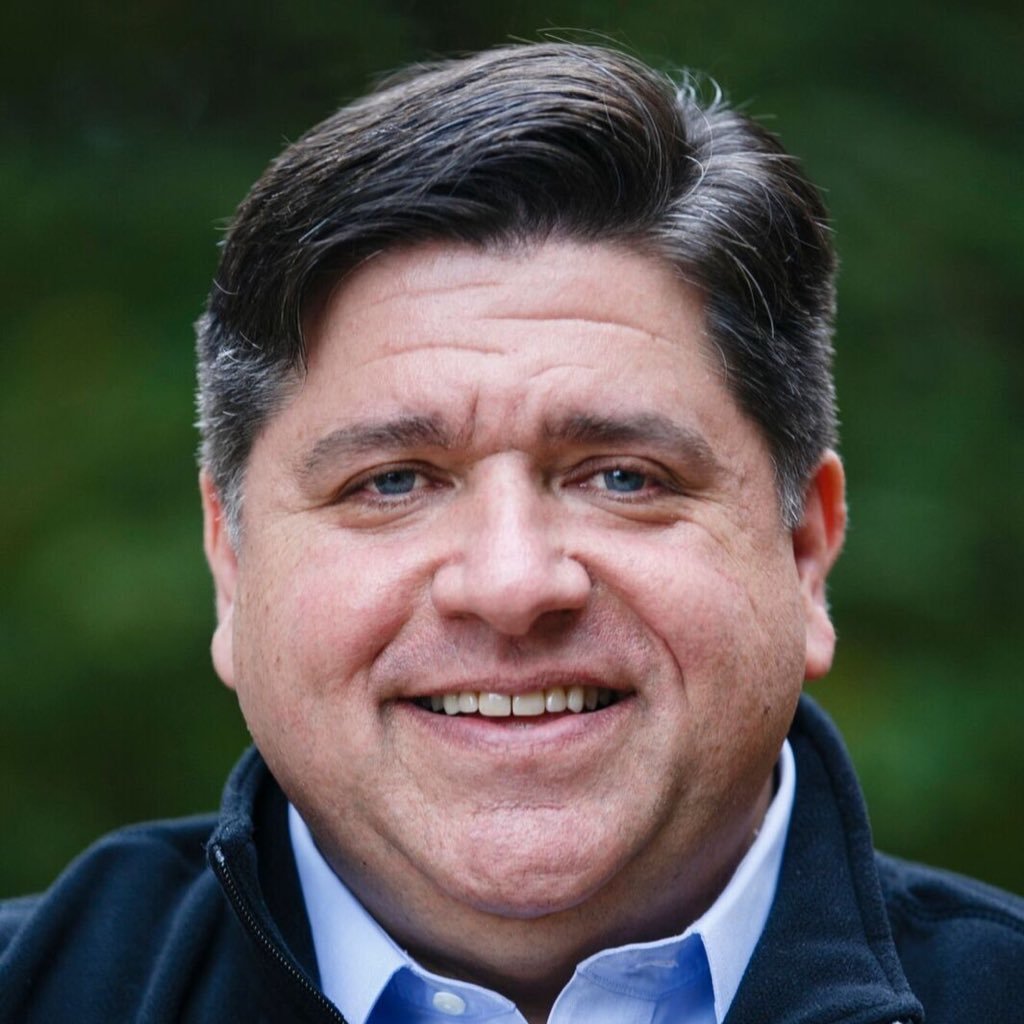
 Burning the near midnight oil, Illinois lawmakers on Saturday morning brought forth a budget closely hewed to Gov. JB Pritzker’s February proposals, one that led to the mandate of a balanced budget, along with relief for taxpayers with spending at $45 billion, and also gives one time payments to individual and married taxpayers, plus rebates to homeowners, and while Republicans have derided the bill as one filled with gimmicks in an election year, nevertheless it does provide significant monies, including refilling a”rainy day” fund that was depleted for nearly two years under the leadership of former Gov. Bruce Rauner.


Pritzker praised the efforts of the Democrats and said, in part, “It honestly felt that we all came into this process committed to a fiscally responsible spending plan that improves our state’s finances and helps people in an hour of genuine need,” no doubt responding to the still lingering problems of Covid and, now, rising inflation.


Of course, no one puts anything less than a concerted effort for a fiscal budget in an election year and with a 73/45 majority in the House and a 41/18 in the state Senate, Democrats are clearly in the driving seat.


One issue that is unaddressed is the $4.5 billion hole in the unemployment fund, and that failure may cost them along the road, during the June 28th primary contest.  The idea is to take $2.7 billion in federal monies form the American Rescue Plan to help pay down that hole which is normally paid down by a self sustaining payroll tax, that went off the rails as more and more Covid related layoffs occurred..


“This action will lead to the largest tax increase on business in the state of Illinois in this state’s history. Employers who have been treated with absolute disregard throughout this pandemic will literally be left holding the bag, and will be responsible for filing the remaining deficit to the Unemployment Insurance Trust fund,” said state Sen. Don DeWitte (R-St. Charles) late last month, according to WTTW television.


“Illinois could – Republicans argue should – have immediately dedicated $4.5 billion of its $8.1 billion in American Rescue Plan Act (ARPA) dollars to wipe out the debt, as did other states.”


And, another is that the suspension of the gas tax will dent road repair, which the tax is designed to address. But, In February Pritzker said that the savings would be $135 million, “without delaying any infrastructure projects funded by the motor fuel tax,” according to the Quad City Times.


A direct criticism by some observers will not only be inflation, but increased crime that is hurtling across the nation, but especially in its largest city, Chicago, where carjackings, personal assaults and subway crime have taken the city down a drain hole, and how the money for violence prevention is spent will depend on a significant decrease, especially in Chicago.


The plan is for $200 million.


For inflation the plan is for a suspension in the 2.2 percent gas tax, and rebate checks up to $300 to homeowners; and, for taxpayers making less than $200,000 per year and joint filers, less than $400,000, $50 each, and $100 “per dependent child, up to three children, according to the Chicago Tribune.


Rounding the corner is a “permanent increase of the state earned income tax credit, which lowers tax bills and often produces refunds, “ for low, and even moderate, income people, especially in households with children, which centers the credit, much like it is on the federal side.


What might surprise some is the $1 billion into the nearly empty aforementioned fund, from the Rauner administration; and even further is an extra payment of $200 million into the woefully underfunded pensions system still the highest in the country.


Adding to the required payment of $9.6 billion gives naysayers a pause, especially in a separate increase of $300 million from March.


This comes from, they say, increased revenue in areas that took in higher earnings and was taxed accordingly, State Comptroller Susan Mendoza has also lowered the backlog of unpaid bills by $3 billion, from $17 billion.


In the past, “major industries that contributed the most to Illinois’s gross domestic product in 2020 were finance, professional services, manufacturing, government and social services,“ noted the Urban Institute.


$200 million is targeted for fighting crime, an issue that has gained national prominence with Dems being soft on crime, especially on the federal level, and their criticism of newly confirmed Supreme Court Justice Kentaji Brown Jackson.


In that vein, Illinois Democrats have extended a 2027 law that lets police use eavesdropping devices during criminal investigations, and extending street gang racketeering law by one year,” added the Tribune.


Bread and butter issues, literally are not ignored and there is a “family relief plan” that includes a temporary suspension of a 1% state tax on foods, equalling one dollar per $100 of food.


While the gaping hole in the unemployment fund, remains to be fixed, supporters and even some earnest critics have agreed that even having a surplus is boon to a state long mired in debt, and the tax benefits and rebate checks to homeowners, and individual and joint filers, gives some gravy to go with the potatoes, even if the whole meal has not been paid for.