Sunday, April 10, 2022

Illinois Dems approve a massive budget with a surplus


 Burning the near midnight oil, Illinois lawmakers on Saturday morning brought forth a budget closely hewed to Gov. JB Pritzker’s February proposals, one that led to the mandate of a balanced budget, along with relief for taxpayers with spending at $45 billion, and also gives one time payments to individual and married taxpayers, plus rebates to homeowners, and while Republicans have derided the bill as one filled with gimmicks in an election year, nevertheless it does provide significant monies, including refilling a”rainy day” fund that was depleted for nearly two years under the leadership of former Gov. Bruce Rauner.


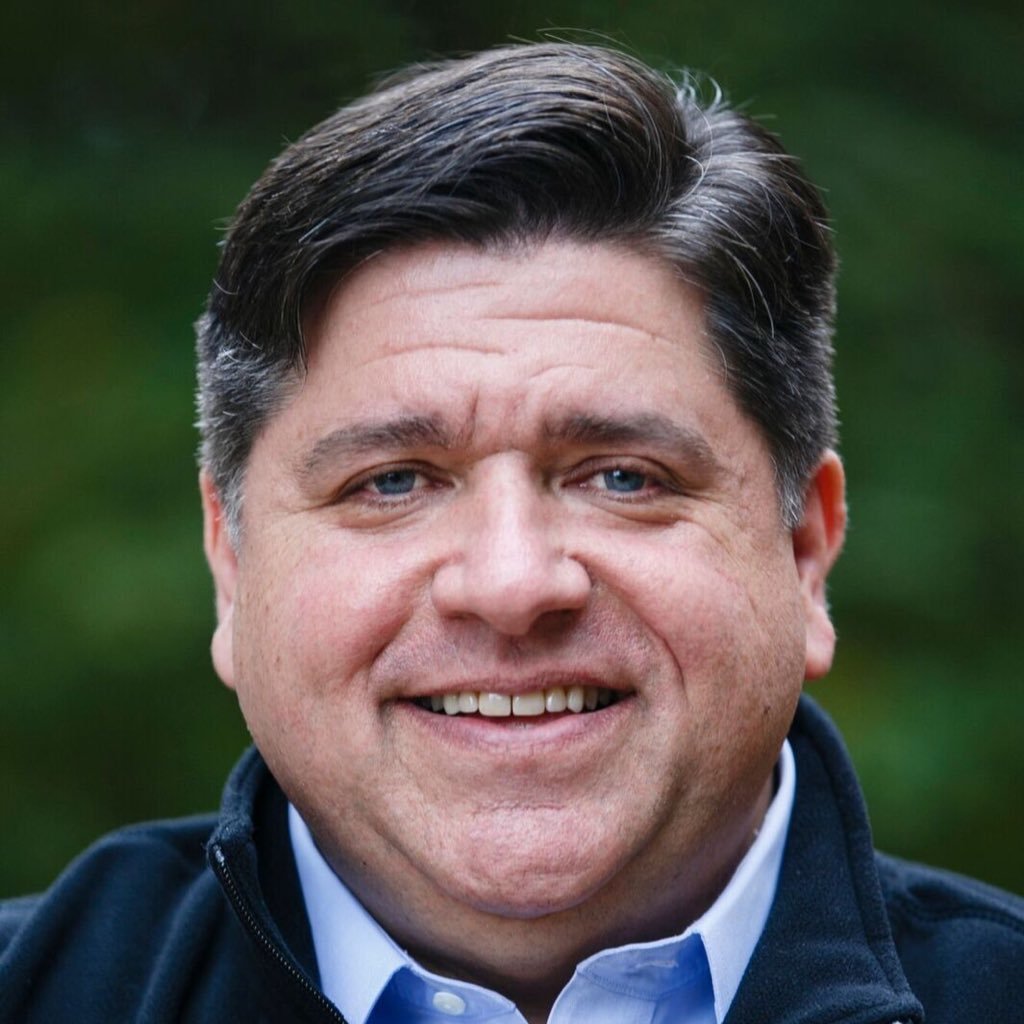
Pritzker praised the efforts of the Democrats and said, in part, “It honestly felt that we all came into this process committed to a fiscally responsible spending plan that improves our state’s finances and helps people in an hour of genuine need,” no doubt responding to the still lingering problems of Covid and, now, rising inflation.


Of course, no one puts anything less than a concerted effort for a fiscal budget in an election year and with a 73/45 majority in the House and a 41/18 in the state Senate, Democrats are clearly in the driving seat.


One issue that is unaddressed is the $4.5 billion hole in the unemployment fund, and that failure may cost them along the road, during the June 28th primary contest.  The idea is to take $2.7 billion in federal monies form the American Rescue Plan to help pay down that hole which is normally paid down by a self sustaining payroll tax, that went off the rails as more and more Covid related layoffs occurred..


“This action will lead to the largest tax increase on business in the state of Illinois in this state’s history. Employers who have been treated with absolute disregard throughout this pandemic will literally be left holding the bag, and will be responsible for filing the remaining deficit to the Unemployment Insurance Trust fund,” said state Sen. Don DeWitte (R-St. Charles) late last month, according to WTTW television.


“Illinois could – Republicans argue should – have immediately dedicated $4.5 billion of its $8.1 billion in American Rescue Plan Act (ARPA) dollars to wipe out the debt, as did other states.”


And, another is that the suspension of the gas tax will dent road repair, which the tax is designed to address. But, In February Pritzker said that the savings would be $135 million, “without delaying any infrastructure projects funded by the motor fuel tax,” according to the Quad City Times.


A direct criticism by some observers will not only be inflation, but increased crime that is hurtling across the nation, but especially in its largest city, Chicago, where carjackings, personal assaults and subway crime have taken the city down a drain hole, and how the money for violence prevention is spent will depend on a significant decrease, especially in Chicago.


The plan is for $200 million.


For inflation the plan is for a suspension in the 2.2 percent gas tax, and rebate checks up to $300 to homeowners; and, for taxpayers making less than $200,000 per year and joint filers, less than $400,000, $50 each, and $100 “per dependent child, up to three children, according to the Chicago Tribune.


Rounding the corner is a “permanent increase of the state earned income tax credit, which lowers tax bills and often produces refunds, “ for low, and even moderate, income people, especially in households with children, which centers the credit, much like it is on the federal side.


What might surprise some is the $1 billion into the nearly empty aforementioned fund, from the Rauner administration; and even further is an extra payment of $200 million into the woefully underfunded pensions system still the highest in the country.


Adding to the required payment of $9.6 billion gives naysayers a pause, especially in a separate increase of $300 million from March.


This comes from, they say, increased revenue in areas that took in higher earnings and was taxed accordingly, State Comptroller Susan Mendoza has also lowered the backlog of unpaid bills by $3 billion, from $17 billion.


In the past, “major industries that contributed the most to Illinois’s gross domestic product in 2020 were finance, professional services, manufacturing, government and social services,“ noted the Urban Institute.


$200 million is targeted for fighting crime, an issue that has gained national prominence with Dems being soft on crime, especially on the federal level, and their criticism of newly confirmed Supreme Court Justice Kentaji Brown Jackson.


In that vein, Illinois Democrats have extended a 2027 law that lets police use eavesdropping devices during criminal investigations, and extending street gang racketeering law by one year,” added the Tribune.


Bread and butter issues, literally are not ignored and there is a “family relief plan” that includes a temporary suspension of a 1% state tax on foods, equalling one dollar per $100 of food.


While the gaping hole in the unemployment fund, remains to be fixed, supporters and even some earnest critics have agreed that even having a surplus is boon to a state long mired in debt, and the tax benefits and rebate checks to homeowners, and individual and joint filers, gives some gravy to go with the potatoes, even if the whole meal has not been paid for. 


Thursday, January 6, 2022

Chicago in 2022? Much like in 2021


 2021 was a watershed year for Chicago and for many, both residents and lawmakers alike, it seemed to be the year of trouble, frustration, and even rage; much of it centered on Mayor Lori Lightfoot, the city’s second Black, and openly gay, mayor.

As the dean of the local political press, Fran Spielman of the Chicago Sun Times, noted some months ago, keeping crime down and the school system sound are hallmarks of the mayor’s office, no matter who is on the seat, or rather hot seat.


Looking at these two key areas we find a very different woman from the one who ran for office, and who, in many respects, seems more like her immediate predecessor, Rahm Emanuel: prickly, thin skinned and prone to defending her appointed leadership, even when they fall on their swords.


In several key, and related areas, she departed from the populist stance that she had as a mayoral candidate, notably for an elected school board, that she favored in one fashion, or another, and which helped her win in key wards, but later condemned.


Crime prevails as number one problem

Unfortunately, for many residents, crime, while on the rise across the nation, seems to have dominated her tenure, and nearly every Chicago headline; while the homicide rate has soared in the space of a year.“


Murders in Chicago last year increased by more than 50%,” the Chicago Sun-Times reported, “compared to a national increase of 30%.”


This area in particular has made Lightfoot the punching bag for many sections of Chicago, and her handpicked Police Superintendent David Brown, imported from Dallas, seems ineffectual, or naive at best, in the court of public opinion


This was especially seen in the aftermath of the George Floyd murder with looters that tailgated peaceful protests in the city and seemed to set the tone, as violence and robberies increased downtown in 2021, with no real abatement in sight.


Carjacking, likewise, was a national trend, but, in Chicago, it seemed like a hobby for many of the city’s youth, as they swept across downtown, Boystown, and the far North Side, stealing subcompact cars, as well as luxury models such as a Mercedes Benz; and, all with the tap of the revolver against the driver’s window. 


Some drivers fought back and were pistol whipped, others were able to flee on foot, but many failed and often lost their phones, wallets and purses, in the process.


These were Intersected with drive-by shootings, the seemingly routine domestic violence, freeway vigilantes wielding guns, but none seemed to match the smash and grabs along Michigan Avenue and Oak Street, as every chic shop had their windows rammed by rental trucks, or flash mobs, entering and stealing everything in sight, later to  be sold on the internet, by black marketeers.


Fashionable women on a budget might be careful in buying an evening bag, from an unknown website at a deeply discounted price, not knowing that it once graced the window of Louis Vuitton, or Gucci.


Helping to derive local coffers of needed revenue as the city struggles to regain an economic foothold after Covid lockdowns; crime and robberies can also affect the tourist trade, as well as local suburbanites going downtown for dinner and a show, and the overseas visitor looking to explore what is often touted as a world class city.


Contrary to public belief Lightfoot has never called for defunding the police, and in fact, her efforts to balance accountability, and give them a long delayed raise, has been largely ignored.


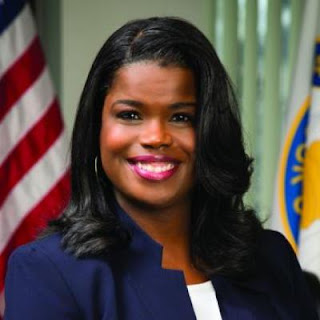
Likewise, Kim Foxx, States Attorney for Cook County has also taken a number of hits, even outside of her fumbling with the Jussie Smollett case, where an early recusal could have saved her from disgrace; but, along with the may she has been repeatedly blamed for the increased crime in Chicago.


With many criminals released on ankle bracelets, and 10 percent bail, the perps are back on duty, often the next night. Foxx in a recent radio interview on WCPT, said “those are the judges” not her office, but many resident and business owners have wondered aren't they under her purview, and why the almost laughing dismissal?


Right behind crime? Chicago Public Schools and COVID

Chicago Public Schools faced the challenges of teaching remotely, or in person, and how to deal with the safety of staff as well as students with Covid. So much so that there were photos of teachers giving remote instruction on laptops perched on snack tables, with teachers in  folding chairs, outside in the freezing cold, in front of their schools.


Former CPS head, Janice Jackson after playing cat and mouse games with the Chicago Teachers Union over safety concerns became so worn down, that she resigned in May of last year.


Now with  increased hospitalizations of children, and an equal rise for adults with the Omicron variant, new concerns are on the horizon and both the CTU and CPS are in meetings as on Wednesday, teachers refused to teach in person; a necessity they say with most students unvaccinated, 60%, at last estimate, and many, unsure of the new variant and its effect on them, and anyone in their care, outside of school.


Now, with name calling and accusations of incompetence, last year’s troubles have resurfaced, and City hall and the new head, Pedro Martinez, seem headed for a public showdown. 


Much like before, in August, as The Chicago Tribune then reported, concerns are for those “COVID 19 quarantine procedures and telework accommodations for CTU members who are medically unable to return to classrooms.”


While students returned to class on Monday after the winter break, new infections due to record level increases of the Omicron variant, the return to the remote has been called a “walkout” according to school district leaders.


They also maintain that current procedures like masking, weekly testing and improved air filtration are enough, and the city’s chief medical officer, Dr. Allison Arwady has said the schools are safe.


Plans to keep the 350,000 student district buildings open reflect both the national trend to keep children in school, and reflect that many parents need to work, in the absence of child care. 


A repeat of 2021 seems imminent and the celebrity endorsement of the CTU is pending.


All of this is set against the drumbeat of complaints about the crime, even with single digit temps reigning in some activity, but crime on Chicago’s subway system, especially its main red line, add to the furor with many residents avoiding it like the plague.


Sentencing and electronic monitoring, battle on!

Central to much of resident ire last year was the sentencing system which bordered on lenience, said many. They also were irate at the electronic monitoring that seemed to be of no effect in monitoring criminal behavior, now, or in the future.


In July of last year, reported The Chicago Sun-Times, after an especially violent July Fourth weekend, “Police Supt. David Brown on Tuesday pointed at the county’s justice system for last weekend’s violence, alleging the courts have been too lenient on those charged with crimes.”

“Chicago police officers are doing their job by arresting people and charging them with murder,” Brown said. “That’s doing our part. And what’s happening in the courts, it’s creating this unsafe environment for all of us.”

According to The Chicago Sun Times, “State’s Attorney Kim Foxx later responded, that day, in a Tweet saying, “Finger-pointing instead of talking honestly about the violence plaguing our city doesn’t help bring solutions that make our communities safer. It starts with apprehending those who pull the trigger; police must make an arrest before a case reaches the courthouse door."

In spite of Brown’s comment, in most violent crime cases where felony charges are sought, police do not charge suspects. Chicago police investigate and present their evidence to Foxx’s Felony Review Unit, which then approves or rejects the charges, or asks the police to investigate further.

This understanding of who does what when a suspect is arrested, is not just Brown mispeaking, but is attributable to much of the public perception as well.

Not helping is the fact that Foxx has dropped many felony charges according to a Chicago Tribune Analysis in August of 2021, and, using statistical software, concluded that “The state’s attorney’s office under Foxx dismissed felony cases at a higher rate than under Alvarez.”

They summed it up by stating that “final outcomes of changes in a case, such as guilty pleas, a finding of not guilty or being dropped entirely,” by Foxx’s office, with a score of 25,183 v. 18,694.

62% of Chicago residents feel that crime has increased from more than a year ago, making it the number one issue.

In tandem with this is that Foxx in a desire to mitigate Covid in the penal system decided not prosecute low level crimes, such as shoplifting, by increasing the dollar amount to $1,000, but as St. Teresa once said, the road to hell is paved with good intentions, and her actions have pilloried her judicial reputation.

In an attempt to stem the tide, and save the day Lightfoot in January for a moratorium on electronic monitoring for the most violent offenders,and said, ““I must continue to sound the alarm about the growing number of pre-trial offenders released back to the communities in Chicago on electronic monitoring,” the mayor wrote. “The ballooning number of violent and dangerous people on EM is one of those drivers as they impact the communities to which they return in multiple, harmful ways.” 

This proposal was quickly shot down by Cook County Chief Judge Timothy Evans who in his fiery retort, said, “In a statement Tuesday, Evans said that under the U.S. and state constitutions, Lightfoot’s request to end electronic monitoring for some defendants treated them as if they were “considered guilty until proven innocent,” reported the Sun Times.

“A judge cannot hold someone pretrial without a finding that the defendant poses a real and present threat to the physical safety of any person. This must be found by clear and convincing evidence and the burden of proof is on the prosecution,” Evans wrote. “The mayor’s proposal seems to require that defendants facing certain allegations be considered guilty until proven innocent.”

His office reported that, “The number of defendants on electronic monitoring as of mid-year 2021 was 3,599, an increase of about 1,400 from 2017 levels”, added the Times.

Where perception meets reality has become problematic with a “he said”, “she said”, between the two, each presenting their stats, with the mayor saying there were 130 people who committed crimes on EM, but Evans said that,”less than 1% of would amount to less than 1% of all cases that include a charge for a violent or weapons-related offense.”

Entering the fray was this:” More than 80% of defendants were not arrested for new charges while on bond, and only 3% picked up a new arrest for a violent offense, according to a 2020 report by Loyola University researchers,” added the paper.

If hope was a promise, then all would be well for Chicago in 2022, but for schools and crime, it looks to be a repeat of 2021.


Thursday, October 28, 2021

Lightfoot budget sails through Council approval


There was an old song, from long ago, with the refrain of “What Lola wants, Lola gets,” and that seems to be the appropriate victory song for Chicago Mayor Lori Lightfoot as her proposed budget sailed from committee and into the city council on Wednesday, where it passed on a 35 to 15 vote, to the tune of $16.7 billion.

Key to its success was a flood of federal money from the American Rescue Plan Act, $1.9 billion, that gave a historical 30 percent increase to city expenditures, and where everyone who wanted money for any cause got it, or as The Chicago Sun Times reported, “There are dollars here for damn near everything that everybody talked about,” said Ald. Jason Ervin, chair of the Black Caucus.


Many residents, and lawmakers, had previously criticized Lightfoot for not proposing a revenue stream for many of the progressive planks that she ran on, as a mayoral candidate, and this budget attempts to reverse that image.


A case in point was her position, along with that of Public Health Commissioner, Dr. Allison Arwady, to not reopen all of the city’s public health clinics, (mostly closed by former Mayor Rahm Emanuel) but to focus instead on the federally qualified health centers of which the latter said, “is more efficient and effective.”


The change in position, to at least open some of them, rankled many, but she did agree to a staffing increase of 72 percent with the five existing clinics; but most of all gave  a boost of $6.3 million.


Some local leaders such as Amika Tendaji, executive director of Black Lives Matter Chicago, said that the private clinics, “falls short in its true service toward the public,” and expressed concerns before the final vote,claiming that there is a lack of accountability, and told local public radio station, WBEZ that, “When you call [them] they don't answer the phone.”


Ald. Carlos Ramirez Rosa, chair of the Democratic Socialist Caucus, praised the efforts of his five member coalition, which also included grass roots organizations, that helped push for the proposed changes that influenced the mayor’s proposals.


The City Council’s Progressive Caucus, said in a statement on Wednesday, “While we still need to prioritize more progressive structural revenue and direct all of these resources equitably, especially around racial redress, this is a progressive budget and a good start.”


Chicago, like other major cities in America, faces a severe lack of affordable housing and Ald. Maria Hadden proposed $10 million, but got $5 million, for the repair, upkeep and renovation of the city’s single room occupancy hotels, “which often house the poorest Chicagoans in the worst conditions,” according to her statement to local public television station WTTW.


Overall, there is $635 million that will go to affordable housing initiatives, a figure that also includes help to 4,000 homes for low to moderate income residents.


Tacking on that is $31.5 million to pilot a year-long program for basic income to poor residents, with $500 checks going to 5,000 Chicago families in the greatest need. 


This was passed over the criticism of the City Council’s Black Caucus who instead wanted a package of reparations for the descendants of Black slaves. 


Civic Federation President Laurence Msall expressed concern about creating an area of dependency for this plan, despite the worthiness of its intentions, and said, “It’s only for one year, or, at the most, two years. City finance officials have assured us that there is no ongoing commitment once this money is passed out,” but he also worries that some might expect that the amount would increase, beyond the federal dollars that support it, and, “is no longer available.”


This view is also shared for the $22 million earmarked to help the homeless population as Doug Schenkelberg, Executive Director at the Chicago Coalition for the Homeless, told WBEZ, in advance of the final vote, “when you’re using a one time funding source, you're not going to have those dollars in the next year, unless you create another funding stream.”


What he would rather see, and will continue to work for, is, as reported, “to lobby the mayor to back their proposal to increase taxes on new property sales over $1 million to create a consistent revenue source to address homelessness.”


Of equal concern, from others, is that to fund these progressive entities the city is “borrowing an additional $660 million,” just as “it pays off another high interest debt it incurred last fall as the second surge of the pandemic crested.”


Using a bond effort, common to city budgets, there are those concerned, Msall among them, who claim there needs to be a detailed plan of expenditure; but, which has not yet been seen, for an otherwise sound fiscal strategy.


Another increase in the property tax levy, tied to the consumer price index (which will grow to $76.5 million) was met with less enthusiasm, by some, especially “on the heels of a $94 million hike in real estate taxes last year,” reported the Chicago Sun Times, held by a vote of 32 to 18.


That $22,9 million, included $25 million to support the first instalment of the mayor’s $3.7 billion capital plan, coupled with $28.6 million from new properties, and an approved bond issue, noted The Bond Buyer.


The elephant in the room is still pensions, and specifically the four plans the city needs to pay, as mandated by the Illinois State Constitution to the tune of $2.3 billion, an “increase of $255 million as compared with 2021.”


Lightfoot praised the plan by saying, “In 2022, with the Budget we are proposing, we will climb our pension ramp, which means that for the first time in our city’s history, and all four pension funds will be paid on an actually determined basis. This is huge,” a statement that Forbes columnist Elizabeth Bauer objected to, pointing out the state law requirement.


She also pointed out that “the plan’s actuarial valuations calculate a figure that’s labelled the Actuarially Determined Contribution;” but, that instead is `` [really] determined “by the Retirement Board for respective plans!”


She says that the city will have to establish rules “when the new Standard of Practice is finally finalized, the city will have to change its ADC calculator. And what that means, is that gap between the city’s actual contribution and the ADC will be even wider, in the short term, with the payoff that the debt is paid off much sooner.”


"Significantly, there is still no long term source from Springfield. Nor has the General Assembly heeded the Civic Federation’s call for a state constitutional amendment eliminating the pension protection clause going forward,”according to the Sun Times.


While Lightfoot can justify enjoying another Scotch and steak with this budget victory there are some valid concerns about what happens to city expenditures after the federal monies run out, and how she can manage strategic issues in the future, among them enduring problems such as homelessness and crime, despite giving the Chicago Police Department by $189 million with a new police contract, and a much delayed pay raise of 20 percent over the next eight years.


Friday, September 17, 2021

Pedro Martinez is new Chicago Schools CEO


History in the making occurred on Wednesday in Chicago when Pedro Martinez was named as the new CEO of Chicago Public Schools, the first Latino of a school system, the nation’s third largest, with a predominant Latino population.

An immigrant from Mexico he was raised in Chicago, graduated from Juarez School, and earned degrees at the University of Illinois, and De Paul university, so his cred as a hometown boy made good rings true.


In naming him, Mayor Lori Lightfoot praised his commitment to low income students, and mostly Hispanic, from his last post in San Antonio. Yet, he joins a  long list of saints and sinners who have held that post, including the now infamous Barbara Byrd Bennet who became a jailed felon after a kickback scheme from a former employer, to others that seemed, more or less, to warm the seats of their office chairs, interims excepted.


Being the seventh CEO in ten years gives many locals pause to see what, if any skills he can bring to a system beset by racial inequality, poverty, and homelessness, against a public that doesn’t trust the system, its adherents, or the ability to provide a sound education.


Martinez, unlike his recent successor, Janice Jackson, has no education degree, no classroom experience, and earned his stripes on the finance side with degrees in accounting and the requisite MBA. 


In addition, while he did diversify the student population in San Antonio he did so through a partnership with charter schools that were heavily supported both in scope, and support, with a corporate model.


Much of that was supported by graduating from the Broad Superintendents Academy, who many see as taking a business model, as its focus. And, this will undoubtedly make the powerful Chicago Teachers Union cringe, who after winning victories with Lightfoot, still has her, and her appointe, in its sights.


There was also a fellowship in the Public Leadership Project at Harvard University, but this, like BSA, seems thin compared to Jackson, with her solid educational credentials.


While there is a moratorium on charter schools in Chicago, coming into town with that as a stain, will not make his tenure easy. Add to that the sheen of a corporate model, the future battles can already be seen.


From the jump, Martinez faces three immediate issues: the Covid pandemic and how it will affect instruction, and its return to in person learning, the demands from the CTU for protection of its teachers, and staff; the continued need for the so called wrap around services, including nurses, and social workers; and, the budget that allows, at least parity with its suburban counterparts, and declining enrollment, and the decision to close, or even merge some schools.


He has leaned heavily on his personal narrative, but this can only take him so far.  In fact, Alejandra Lopez, president of the employee union in the San Antonio district cautioned, “Don’t be fooled by his personal narrative of growing up as a working class person, because I think unfortunately that can serve as a bit of distraction from what his records shows,” reported The Chicago Sun Times.


CTU has said, in a statement, with a side swipe at the mayor, “Despite having no classroom or in school experience, Mr. Martinez will have to be an independent thinker, a far better partner and collaborator than Mayor Lightfoot,”


He also will face a new 21 member school board, a long sought dream by progressive educators to give a role to parents, but one that was trashed by Lightfoot, despite her earlier promises, as a mayoral candidate, to look favorably, at least, on a hybrid model.


Martinez responded that, “for the last decade, that’s all I've had is school boards,” but affirmed that his allegiance is to the mayor, and, “the support of the city.”


He had a run-in with a school board in Nevada, which fired him, but was later forced to retreat, on a technicality, and hire him back, and later send him out with a six figure salary.


It’s unclear exactly how many Latinx students are in Chicago schools, the Chicago Sun Times approximated that while being one third in 2000, they are half of the district today.


Certainly, the optics of having a Latino also supports their growing political power in Chicago, and also as the recent census shows, people of color are taking a dominant feature in American life.


No one is expecting a honeymoon period for Martinez, and his track record is often uncomfortable reading: facing a possible takeover by the state of Texas if low performing schools did not turn around, he felt he was left with no choice than to partner with charters, reported Chalkbeat, claiming, It left my board and I with really limited options.”


The subsequent partnership with a high school charter, called “the Centers for Applied Science and Technology, or CAST. . .which have an impressive list of university partners, tout internships and dual credit opportunities. . . quickly became a draw.”


Problems arose when these schools adopted “a substantial fraction of their enrollment from wealthier areas outside city limits,” that increased enrollment, as well as “economic diversity but meant some local city students had to compete for seats.”


In Chicago, Martinez will also have to face black parents and their distrust of a system that saw 50 of its neighborhood schools close under former Mayor Rahm Emanuel, and the threatened, but failed recent action to close a high school, and transfer their students to an award winning elementary school, displacing the latter.


Like many school systems across the country Chicago faces using emergency funds from the federal government, but also the temptation to use that money for additional personnel, but fear that when the money ends, which is only temporary, how can they sustain them on a tight payroll?


Inquiries as to Martinez’s salary have not been met by local media.


Monday, August 30, 2021

Chicago Public Schools face anxiety with a surging virus


When Chicago Public Schools open Monday, students, parents and staff will face a different landscape than last year, which due to the Coronavirus pandemic, mostly prevented in person learning; but, this year is different both with the Delta Variant surge as well as politics.


While many parents bemoaned the pressure, and the challenges of remote learning, there were some, perhaps the minority, where students thrived, including some special needs students who welcomed the change; but, for many others it hampered both their social and emotional skills development. 


CPS largely agrees that the benefits of classroom learning are the best course, but they have also frustrated some parents who want a greater level of protection from the surging Delta Variant, as well as a level of commitment that there be some contingency plans for remote learning.


They are joined by the Chicago Teachers Union who would like to see some type of plan, even an algorithm, that would protect students and teachers, if cases increase, and schools may need to close, even if only for a few weeks.


What they have received is that there will be no mandatory online health check required, and that parents are on their own judgement to create one. Added to that there is a looser path towards social distancing, with a varied view ranging from  3 to 6 feet, but with the latter maintained during lunch periods.


Masks are now mandatory from last week’s order from Illinois governor, J.B. Pritzker, who says they must be worn by everyone 2 or older, beginning Monday, and for students, “from kindergarten to college,” reported The New York Times.


Chicago is the nation’s third largest school system, and faces wide gaps in racial makeup, student family income, and also contains many homeless children, who face the pandemic in ways that other students may not.


Leading the changes, and the worries among parents and educators is that “the seven day average of newly reported Covid 19 cases in the state has tripled to 3,533 from 1,140 a month ago, according to data compiled by Johns Hopkins University,” and reported by The Wall Street Journal last week.


Hospitalizations have also increased at a level not seen since May, which concerns the Illinois Department of Public Health Director Ngozi Ezike as she has seen an increase filling hospital beds to an average of almost 500 ICU beds.


As we’ve seen, most of these occur among the unvaccinated, and with school children under 12 years old, who cannot yet be vaccinated, protections are now in place from the state as well as the local level in Illinois.


Pritzker’s mask mandate is a strong measure to prevent the further spread in this population, and  has so far not been a political football as in other states such as Texas, or Florida; giving relief to many.

Illinois Gov. Pritzker


One development for those schools in some states that are fighting for, or rejecting, mask mandates is that insurance providers may not provide coverage for pandemic related lawsuits this school year, noted edweek.org, and that they “are also threatening to entirely drop districts hat fail to follow public health mandes, such as states’ requirements that all students wear masks.”


“Everyone has an idea of what the guidance should be. But insurance companies have the power to say, ‘We won’t cover you,’” said Helio Brasil, the superintendent of the Keyes Union school district in California. “There’s a veto power there, and I’m back at ground zero.”


“PJ Caposey, the superintendent of the Meridian school district in Illinois, has been struggling to explain to parents in his community why he’s requiring all students this fall to wear masks inside school buildings.


Earlier this summer, the district had planned to make masks optional. Even when public-health agencies were strongly recommending masks, Caposey held firm.


That changed on Aug. 4, when Gov. J.B. Pritzker issued a statewide mandate for universal masking in schools to combat the surging spread of the highly contagious Delta variant of COVID-19.”


“I live in a community that would prefer me to defy the governor’s order and just do school the way I want to,” Caposey said.


But, Caposey said, “If we don’t listen, the insurance companies can say we’re not going to be protected. People don’t want to believe me or don’t think that’s a good enough reason.”


There has been a steady increase in children with Covid since July, a fourfold increase according to the American Academy of Pediatrics, “rising from about 38,000 cases the week ended July 22 to 180,000 the past week, according to the AAP,” in a report cited by the Journal.


An important caveat is that all who  are “eligible in a household with young children get vaccinated to better protect them,” they added.


The Midwest, along with the South, has also seen a significant increase in the number of children admitted with Covid 19, reaching a peak of 282 from Aug. 12 to the 18th, yet the AAP considers these hospitalizations, and even death, uncommon.


Edging into the data, and beyond, is that many school districts are distancing themselves from “clear metrics” and have moved to a wait-and-see approach, added the Journal, and this seems to be the Chicago approach: avoiding repeated change, and subsequent anger from teachers by the very powerful CTU.


What CPS has said is that there might be a “brief pause in an entire school’s operation is a serious step, but may be necessary in some circumstances.”


Hitting the nail on the head was Jennifer Finley, the health services director at Dallas Independent School District, who in her Journal interview, said, “There’s no magic number.”


That may be the case but, “districts around the country are already seeing quarantines and closures due to the virus. More than 10,700 students and school employees in Hillsborough County, Fla., last week were either in isolation because of a positive Covid 19 test or in quarantine due to potential exposure.”


Close on the heels of the numbers is a high level of anxiety, reported The Hill, on Monday, that Boston’s Children’s Hospital has seen more children report to the hospital with symptoms of anxiety,” than pre-pandemic.


It was also noted that ”already, schools in 19 states have sent at least 90,000 students to quarantine, while others have shut down, just days and weeks into the year.”


Taking a giant leap forward was the Culver City Unified District outside of Los Angeles who are making all students over the age of 12 to get vaccinated “by mid November to help avoid closure decisions.”


New York has the largest public school system in the US and has taken a more targeted approach to the dilemma and has a plan that “will test a random sample of 10 percent of people in schools every other week,” that will focus on students, and only students, while all adults will face a vaccination requirement.


All elementary children will face required testing, with parental consent, and “only unvaccinated middle and high schoolers will be tested, reported the Times.


Monday afternoon’s news from The Hill has chilled those states that have bans on mask mandates:


“The Education Department announced on Monday that it has opened civil rights investigations into five statewide bans on mask mandates to determine whether they discriminate against students with disabilities.


The department’s Office for Civil Rights (OCR) sent letters to school officials in Iowa, Oklahoma, South Carolina, Tennessee and Utah describing how bans on universal mask requirements could prevent schools from implementing policies that protect students from COVID-19, particularly those with underlying medical conditions “related to their disability.”


Spared, for the moment, are Arkansas, Florida and Texas, “because those states are not yet enforcing their policies due to court battles or “”other state actions.””


Tuesday, July 13, 2021

Illinois and Chicago wrestle with pensions despite ratings


The state of Illinois got a much needed jolt in the arm at the end of June, when its credit rating was boosted, pulling it back from its general obligation debt to Baa2 from Baa3 by Moody’s Investors Service, supported, in part by tax revenue, bounce backs from federal coffers, and a rebound in the state’s economy.


Gov. JB Pritzker crafted a budget that increased pension contributions and paybacks of emergency money from the Federal Reserve, giving some much needed juice to rumors' that it was going to be the first in the nation to be at risk of having its bonds cut to junk.


Pritzker noted at the time, “it’s a huge note of progress for our state,” and added, “Illinois’s fiscal condition is heading in the right direction for the first time in the 21st century.”


Coupled with Fitch’s raised outlook to positive to negative, praised the state’s “fiscal resilience,” according to Bloomberg, but also noted that Standard and Poor's along with Fitch are “still one notch above junk,” and retains “the lowest credit rating of all U.S. states.”


Earning high marks was the payback of $3.2 billion in monies borrowed from the Fed’s emergency loan program; and got a booster shot of $8.1 billion from President Biden’s rescue funds.


Still looming on the horizon is the rating, toward the bottom, for unfunded pension liabilities, according to the American Legislative Exchange Council, a conservative membership organization that espouses “limited government, free markets and federalism”  ranks Illinois 49th for total liability, on a per capita basis, of $31,980 per person.


The right leaning website, The Center Square, in a recent email noted that “Failing interest rates and weaker than expected investment performance have also been hampering the state’s pension plans.”


Taking the conservatives' take in hand, Illinois still has work to do, and pension reform is among them.


While the right likes to blame the malfeasance on the shoulders of Pritzker, others like News Gazette columnist Tom Kacich, have traced much of the blame on Republican governors and university presidents who kicked the can down the road. 


What a can: $317 billion was the number from Moody’s in June 2020, and that reflected a 19% increase at the end of FY 2019, and currently the state has from the total of 5 retirement systems $144 billion in unfunded liabilities, and needs $10 billion just to stay afloat.


On the other side of the equation, its largest city and the driver of the state economy, Chicago, has a pension debt obligation of almost $1.1 billion in 2020, according to the city’s audited financial reports, according to a recent report from local public television station, WTTW.


The bad news: Chicago owes $32.9 billion to all four pension funds belonging to police, firefighters, municipal employees and labor, they noted, quoting the 2020 Certified Annual Financial Report, an increase of almost 3.5% from 2019.


If the devil is in the details, then this growth was anticipated, said Chief Financial Officer Jennie Huang Bennett, since the required payments are based on actuarial estimates, and as the station noted, “helped balloon the city’s structural deficit,” beginning in 2020.


That withstanding the debt is still “significantly” underfunded per Chicago’s Annual Comprehensive Financial Report for 2020.


While critics have complained about the city’s tardiness in releasing the report, it’s easy to see why the bad news takes so long, with the revelation that firefighter’s funds has the “lowest level of the four, at 19%..”


The city’s mayor, the much beleaguered, Lori Lightfoot noted that it is the biggest problem with Chicago finances, and promises to “force a reckoning” in Springfield, but city hall observers and economists wonder what she can get from Pritzker without jeopardizing their relationship, and on the heel of the aforementioned financial success Pritzker managed to eke out.


Some in the local media have speculated that the changing role of Chicago mayor has deviated so much from yesteryear, if she can muster the power to go to Springfield, even hat in hand.


It should be noted that while she has not offered a specific plan, changes to the pension system “can only be changed with an amendment to the Illinois Constitution.”


Much like the state's increased contributions ,”the city will pay its four pension funds $1.8 billion, approximately $91 million more than in 2020, from its $4 billion general operating fund,” according to plan.


Paralleling the state, Chicago got $1.4 billion in aid from the government” and “ended the ear with $197 million in cash on hand, $12 million more than expected,” in a quote from Bennett.


Covid took Chicago, and other US cities to its knees, and it took in $405.5 million less than expected in general funds, and created a $886 million hole in the budget.


Facing this dilemma requires even more than good intentions, many have said, but even getting to the road that is paved with them may take a miracle.