Saturday, October 8, 2022

North Side homeless encampment angers residents

On the far North Side of Chicago, a homeless camp of nearly 30 unhoused people have camped out in Touhy Park, angering residents and frustrating Ald. Maria Hadden as she struggles to find a balance between compassion for a group of mostly Blacks, although exact figures are unknown.

Chicago, like many large urban cities, struggles to deal with a burgeoning homeless problem, born from job loss, divorce, spousal abuse and other factors, that seem to be largely ignored by some residents who have mischaracterized the entire group as drug users and abusers, with “lazy bums” being the kindest description.


The resident protests have culminated in accusations of vehicular violence by a local community newspaper columnist, who railed against the perception that she is a racist, suggesting ,to some, that race may be more of a factor than indicated.


There was also a fake 5-day notice with Hadden’s name as signator, that were placed in the belongings of the campers, and posted on the signs in and around the park according to Block Club Chicago, in an apparent effort to dislodge them.


It also stated that they would be housed in an elegant downtown hotel, the Four Seasons indefinitely till Hadden found them “appropriate housing.”


The proposed server was Bill Morton, president of the Rogers Park Chamber of Commerce and a candidate in the upcoming aldermanic election against Hadden.


Sarah Lim, a DePaul university student, claims responsible for the fake notices and says that she and Morton have worked together “on previous political efforts.”


Lim also claims the stunt was designed to drive people to her website for discussion.


Hadden went to the park to tell park residents that the notices were fake, and later stated that many were in tears on hearing the truth.


A recent community meeting convened by Hadden, on Zoom, last Monday, seemed to be more of a referendum on Hadden, than providing solutions to a problem that has ebbed and flowed with some earlier success at housing 64 previous tent dwellers at the park.


Some at that meeting were virulent in their protest to have the police enforce the 11:00 p.m. curfew, and complained of soiled clothing and hypodermic needles littering the area near the park,despite the fact that other residents told us that drug use and sales, had been a long term problem plaguing the neighborhood for decades, especially along Howard Avenue.


In the seemingly effort to enforce resident safety and programing, fieldhouse activities were transferred to nearby Pottawatomie Park, but the phrase, “no good deed goes unpunished” applies here, with residents up in arms over the temporary transfer.


To separate fact from perception we contacted Hadden’s office and reached Leslie Perkins, her chief of staff, to answer some questions about the encampment:


DG: Would you say pending any more partnerships with agencies, the Park District, etc. that keeping the encampment is a temporary measure, albeit unwanted, till a more "permanent" solution is found?


LP: “Our office is scheduling a meeting with the Department of Family Support Services and the Park District to discuss how we can depopulate the park before cold weather sets in. We're faced with an unfortunate reality in Chicago that our shelters are at 98% capacity and that we don't have enough units for people who are unhoused. We have initiated talks with these departments and the Mayor's office to see if we can explore emergency funding to shelter people.” 


DG: What are the approximate ages and races of the tent dwellers? Are their families present, with children?


“To my knowledge, there are no children in the encampment at Touhy Park. I don't have a breakdown of the demographics of the individuals there. We have seen a rotation of people come through the park as people are connected to units and as people become newly unhoused. That being said, statistics have shown that Black men experience homelessness at higher rates than other demographics in the US.” 


DG:Since there are, as well-established high market rate apartments in RP, as well as the city, what assessments are being made to provide even a temporary setup, such as the High Ridge Y. To expand, many are probably not ready for shelter housing, due to drug and/or alcohol use, low, or no income, poor credit history, etc.. So, what can be done, outside of the main objective of affordable housing, and as you know this is an issue for everyone in Chicago?


“The temporary shelters for migrants was made possible with federal emergency funding. Our office has initiated talks with the Office of Budget Management, the Mayor's Office, and DFSS to see if those funds would be available for our homelessness crisis as well. In addition, our office recently wrapped up a community process for North Side Housing to open a men's shelter with 72 beds at Clark and Birchwood. Our community overwhelmingly supported their proposal, with more than 70% of respondents saying they were in favor of the shelter opening at this location 


Our office is also the lead sponsor on the Bring Chicago Home resolution, which would establish a dedicated revenue stream to combatting homelessness. Finally, the city and our partners are committed to a housing first approach to combating homelessness. This means that you work to get someone into stable housing and then provide them with the wraparound services they need, be it mental health care or substance abuse care, to remain in housing. This creates fewer barriers to getting into a unit.” 


DG:It seems that many of the residents are concluding that ALL of the camp residents are drug addicts.


“Our office doesn't have figures on the number of people struggling with substance abuse. That said, there are several factors that can lead to an individual to experience homelessness, and singling out one issue reduces the complexity and nuance of driving factors of homelessness. Unfortunately, our city - along with municipalities across the country - is in the middle of a homelessness crisis.” 


DG:It’s apparent that across the city, there have been many homeless camps over the last several years: underneath the viaduct at Montrose Avenue, near the Kimball and Lawrence underpass, and on the grounds of the Graeme Stewart school in Uptown, and this is only a partial list, so even for a casual observer, the problem can be seen, and Perkins expanded on some of the reasons how people become homeless.


“The Chicago Coalition for the Homeless just issued its 2020 report on homelessness in the city. From 2019 to 2020, we've seen a 12.6% increase in people experiencing homelessness. In 2019, Charles Schwab conducted a survey on savings and found that 59% of respondents at that time were just one paycheck away from experiencing homelessness. And that was in 2019 before the pandemic hit, which brought with it a whole new set of financial challenges for people. Many lost their jobs and fell behind on rent. While rent relief was made available, the demand for funds far exceeded their availability.”


“Now, people are facing skyrocketing costs of living. In Chicago, the average rent for a 750-square-foot apartment is now more than $2,200/month. That's on top of paying more at the gas pump and grocery store due to historic inflation. People are getting squeezed from every direction financially, and it's driving rates of homelessness. Our office has 3-5 people a week come in who are experiencing homelessness for the first time. Our staff is helping people call for housing assessments with the Coordinated Entry System. This isn't something that we saw as much in 2019. And the Economic Roundtable projects that chronic homelessness will only grow by 49% over the next four years in the US if we don't do something to intervene, which is why we're fighting for a dedicated revenue stream for homelessness prevention.” 


DG:Sanitary conditions were brought up repeatedly in the Zoom meeting and especially in the chat area, so are the cleanups, and the porta potties cleaned daily of what is not needed for "living"?


LP:“The port-a-potties are cleaned weekly. We advocated as well for extra staff to help the supervisor clean up the park every day.” 


DG: You seem to have a good relationship with the Parks Dept, can you say the same about the police? (there seemed to be suggestions in chat that you don't) If not, do you see this as an impediment, with this issue, and future ones?


LP:“Our office has a great relationship with Commander Brennan and the 24th District. We communicate with them regularly and bring concerns to their attention when they come through our office. Alderwoman Hadden has regular checks-in with the commander, and we have a staff member who attends every CAPS meeting in our ward. We will continue to work with them on all concerns that come through our office.”


DG: Do you have a deadline --- you mentioned winter as a possible marker -- for a solution?


“Our office would like to see people in units before extremely cold weather sets in. We are going to be meeting with our other city officials in the coming weeks to discuss how we can come up with a plan to depopulate the parks”. 


DG: You referred to federal dollars to help, is this from the mayor's budget or something specific to your aldermanic budget.


LP:“Since the aldermanic discretionary budget is bonded, there are strict restrictions on how it can be spent. This means that money only be spent on capital infrastructure projects, such as street resurfacing. The corporate fund has more flexibility and includes funding for homelessness. As we enter budget season, we will be making this a priority issue. We also would like to see a dedicated revenue stream by passing our Bring Chicago Home resolution."


Chicago has entered a crisis phase, of sorts when it comes to the racial divide, and economic challenges, sorting solutions can be problematic, and how decisions are made on who can do the heavy lifting, has proven to be an enormous task; and, with the combined efforts of who makes decisions, how they are made, and when, makes the task of equity even harder.


New South Side school angers many, pleases many


It’s no secret that Chicago is one of the nation’s most segregated cities and the division between North and South sides, while often geographically distinct, are also politically and even psychologically different. These divisions can also become blurred by economic and political power, those who hold it, and those that don’t.

One of the starkest difference is in education, with a system that is mostly financed by taxes, and (where many  students often don’t attend their neighborhood schools), the quest for secondary education has hit a new high with the pending creation of a Near South Side high school, at 24th and State, on the site of a former public housing facility, that has generated support from Mayor Lori Lightfoot and Chicago Public School superintendent Pedro Martinez, which has made it a reality despite recommendations that it threatens to siphon off monies needed for Black schools in the area.


Mayor Lightfoot

These early warnings aside, supporters say that the new housing can be built elsewhere, and local residents and city hall observers are wondering what has caused this much support for a project that is projected to cost $120 million dollars.


Area residents also remember the 50 schools closed by former mayor Rahm Emanuel whose hamfisted closures brought a huge protest, but that, in the end, was to no avail: and, many remain vacant, while others, mostly on the North Side, have been converted to luxury condominiums.


WBEZ, in partnership with the Chicago Sun-Times, reported that earlier, “a team of senior officials at Chicago Public Schools privately wanted leaders that the project could undermine those schools and ultimately hurt Black Students.”


Most parents and community activists say that it’s not difficult to see that the new school will have new technology, science labs and performing arts spaces that the old ones lack, and those existing would  be underfunded by CPS, and could be shuttered, further nibbling away at what Emanuel left undone.


These divisions, and past actions, wedded to the present, do not bode well for South Side schools, threatening the future of their mostly Black students.


Some of these same schools are also often under-enrolled by 34 percent less; with Wendell Phillips alone holding a previous year’s enrollment of only 8 percent to capacity, and some fear that this may be the city’s response to solve the issue of under enrollment.


An important aspect: There has been a critical population of Asian American students in the Chinatown area that are willing to travel miles to attend the Thomas Kelly College Prep school, rather than attend nearby Black schools such as Wendell Phillips Academy that are closer to Chinatown, and nearby neighborhoods.


Fueled by fears of violence, unjustified, at best, according to reports, but perception has won out, and Kelly now holds 11 percent of those Asian students. 


Those fears are often combined with a perceived lack of quality in the Black schools, even though there are recent graduates that have been accepted, many on full scholarship, to quality public colleges and universities.


The Sun-Times and WBEZ reporters summed it, by saying, “the new boundaries for the proposed 1,200 student neighborhood school at 24tha and State street captures Chinatown, South Loop, Bridgeport, Douglas and parts of the Near West Side - which include some affluent areas with significant white and Asian populations,” whose residents “have long complained they don’t have a viable neighborhoods to school to send their children to, largely a rejection of mostly Black high schools their kids could attend.”


There has also been a significant increase in the political power of Asian Americans in Chicago and now, “Formerly splintered into multiple wards, Greater Chinatown residents will now be represented by one Alderperson in Chicago’s first Asian American majority ward.”


Grace Lee is the new alderperson, and in her announcement, Lightfoot said, "“Nicole Lee has spent her life expanding and amplifying 11th ward issues and voices,”and “Her dedication to empowering communities and building coalitions is evident in her career and in her involvement in a variety of community organizations. She is the right choice to make sure 11th ward residents are fully represented on the Chicago City Council.”


The response has been overwhelming, and “We are thrilled that City Council has created Chicago’s first Asian American majority ward following months of advocacy by community leaders,” said Grace Pai, Executive Director of Asian Americans Advancing Justice | Chicago. for a Better Chinese American Community, Pui Tak Center, and Chinese American Service League.”


“I think representation is really important,” said David Wu, executive director of the Pui Tak Center, who’s also the board president of the Coalition for a Better Chinese American Community that’s been working toward this establishing the ward. “Really you need someone to push as hard to make sure that the wide diversity of Asian Americans, especially those who are newer immigrants, can gain access to services.”


As author Natasha Warikoo wrote in “Race at the Top”: “white and Asian parents alike will do anything to help their children get to the top of the achievement pile.”

Wednesday, August 24, 2022

Chicagoland police face a summer of discontent


It’s been a controversial summer for Chicagoland police as they face intensive scrutiny for controversial behaviors, firings and shootings, and controlling crime across the metropolitan area, especially on Chicago's fabled El trains, and the firing of Robert Boik, Chicago Police Department, executive director of constitutional policing and reform, which sent shockwaves through the law enforcement community.

The late July detention and beating of a young Palestinian American boy seemed to be the catalyst for yet another charge of police brutality by police in Palos Hills, Illinois as they stopped a car without a front license plate and the aroma of cannabis. While one of the teens cooperated with the search, another 17-year-old Hadi Abuatelah, by Oak Lawn police, allegedly beat him ten times on his shoulders, and also a fractured pelvis and intracranial bleeding among other injuries.


Police have not released the body camera film, but a passerby recorded the incident on her cell phone, in a one minute footage, that also prompted cries of outrage against excessive force on the teen who appeared to weigh 120 pounds. 


Newsweek reported that the police claim there was no bodycam video, and since the recording only shows the beating, there remain many unanswered questions.


The Council on American-Islamic Relations-Chicago has joined with Abuatelah's family and has “filed a civil rights lawsuit against the officers and the village, alleging police used excessive force and the officers and department engaged in “racially motivated conspiracy” to deprive the teen of his civil rights,” reported Suburbanchicagoland.com.


An assault gun was found at the scene and there was suspicion that the teen had it in his accessories bag, slung over his shoulder.  One report described the weapon as “a Raven Arms P2 25 25 Caliber Semi Automatic weapon with three rounds of ammunition and a THC Vape cartridge which he later admitted to smoking.”


According to the police statements.after he was captured, Abuatelah tried to keep the bag throughout the incident,


"Regardless of the alleged infraction that led to the arrest, the video clearly shows a restrained teenager in submission, not resisting, being brutally beaten by three officers without justification," Council on American Islamic Relations Chicago Executive Director Ahmed Rehab said.


Oaklawn police say that they are conducting their own internal investigation.


According to The New York Times, “Zaid Abdallah, the boy’s lawyer, said that Hadi was a passenger in the vehicle. The lawyer said he did not know what the traffic stop was about or why Hadi had decided to flee.”


Oak Lawn police Chief Daniel Vittorio claimed the officers “feared Abuatelah was reaching for a weapon, and used management ways to launch the teen’s arms.”


“You have him subdued,” he said. “If he broke the law, we have a process for that in America. You arrest the person. He goes to bond court. He goes to his preliminary hearing. He goes to trial court. This is the process. The process is not smash his head into the pavement.”


“Regardless of the alleged infraction that led to the arrest, the video clearly shows a restrained teenager in submission, not resisting, being brutally beaten by three officers without justification,” Ahmed Rehab, executive director of CAIR-Chicago, said in a statement. “The issue here is excessive force and police brutality. Something we are seeing again and again and again.”


There are also claims that the teen was tased.


Claims of ongoing racism in this community have acerbated reactions, with the largest community of Palestinians and Palestinian Americans in the country, displaced from the West Bank after Israeli occupation.


In a statement from the AAAN, they said, “In addition to the demand that the three Oak Lawn police officers be fired, the AAAN has also been pressing Cook County State's Attorney Kim Foxx nonstop for over two weeks to drop the charges against Hadi and instead charge the officers who viciously beat him.”


The next court date is Aug. 25.


Internally, a dust up between CPD Chief David Brown and Robert Boik, erupted after the latter insisted on the terms of the Consent Decree with the Federal government that was made in the twilight of the Obama Administration.


Boik had learned that there were 46 officers that had to be sent back to patrol duties, instead of the required in-service training mandated by the terms of the decree, reported The Chicago Tribune.


“In Boik’s email, which was obtained by the Tribune, he said that if those individuals were moved to patrol, there would be 21 fewer instructors at the academy and the department would no longer be able to offer an eight-hour gender-based violence course to officers this year.”


Furthermore, “The decision would also result in 10 fewer people in the crisis intervention training program, which would diminish the program by about 30%, according to the email. Putting these individuals on patrol would also put a minimum of 8% of the department’s current consent-decree compliance at risk.


“Beyond the consent decree requirement to train our frontline officers, we have a fundamental obligation to ensure all our officers are provided with equal tools to do their jobs in the field. With the proposed cuts, every single officer will fall short of 40 hours of training this year,” Boik wrote in the email.”


The back and forth continued with Brown wanting to address city wide violence and Boik countering that his “email suggested that his staff would be moving to districts all over the city and “therefore will likely have minimal impact on patrol capacity for any one district.”


Praise and disappointment, at the decision, overflowed local media with the Tribune saying, “Arne Duncan, a managing partner of Emerson Collective and the founder of violence prevention organization Chicago CRED, wrote in a statement: “Bob Boik was fired for blowing the whistle and telling the truth — that he has no support and that the administration is not serious about police reform. Trust between the police and community is already far too low, and losing him is a big step in the wrong direction. That is dangerous for our city, for the community and for our police officers.”

There seems to be a pattern arising, and “Chad Williams, the former civilian commanding officer of the Police Department’s audit division, resigned in 2021 after emailing Mayor Lori Lightfoot to say he had been proud to lead the unit but had become disillusioned and was resigning his post.

“Unfortunately, my disappointment with the inability of this department’s top leadership to even feign interest in pursuing reform in a meaningful manner has made it impossible for me to remain involved,” Williams wrote in the email, as previously reported by the Tribune. “

Of the most pressing problems for Chicago is crime, rampant crime with carjacking's, robbery, theft and personal assault. Mayor Lightfoot, placed on the hot seat, has said that there have been improvements and that murders and shootings are down,16 and 18 percent, at the close of the 32nd week of 2022, yet some including Wirepoints and WBBM suggest that those numbers fail to include the baseline year of 2019, just before the Covid pandemic and the murder of George Floyd, the reaction of illegitimate protestors, and those that tagged along to loot and rob.

If that is taken into account, they say, then the numbers look worse, 31 and 33 percent respectively, yet that aside, the public perception that the city is not safe is dominant across the dinner tables and boardrooms of the city, and some companies have left the city such as Ken Griffin’s Citadel to Miami.

WBBM reported that “Lightfoot said her administration’s efforts are bearing fruit, including an 18% drop in homicides over last year.

“But when told many residents still don’t feel safe, she fired back:

“The perception, if it’s not accurately reported by the media, will continue to fuel a feeling that the entire city isn’t safe,” Lightfoot said. “It is important for our residents to know that we have a plan that we have implemented that is showing progress. And it’s critical that the media report that.”

She conceded that a lack of accountability for people who commit gun crimes has also led to more perpetrators feeling bolder about using violence”

The problem is that the plan has not been seen. And, on the city’s iconic El subway system, especially the Red Line, crime is rampant and there have been well documented reports in the media of people with bloodied faces, and passengers fending off gangs with their own weapons, and knives, often resulting in loss of life on both sides.

The police force assigned to the CTA has been reduced and there are concerns in some quarters of over policing that might result in racial profiling, but the volunteer force, and hired guards with dogs, have been mainly used to remove the unhoused, as they seek shelter on trains and buses.

Police have pointed to low ridership, due to Coviid, as being less of a deterrent to crime, but statistics cited are often inconsistent, and the use of the crime database was called, “tricky for all but the most hardcore data nerds to use, said Wirepoints.

There have been long standing issues with crime on CTA trains, for years, but now it has also spread to buses, where last summer, a man riding in broad daylight on a bus, in the River North area, (a gentrified neighborhood), was stabbed by a woman, later determined to be mentally ill.


In May, the situation intensified to the point where Sen. Dick Durbin (D) of Illinois and US Rep Jesus “Chuy” Garcia wrote a letter to the CTA, and they said, in part:


“While we appreciate the efforts that both the CTA and Chicago Police Department recently have made to increase passenger and employee safety on trains and buses throughout the CTA’s network, more needs to be done to protect CTA’s frontline workers and passengers given the alarming increase in crime on the CTA system,”


A local station, ABC 7, reported their response, "saying the safety and security of CTA customers and employees is its number one priority,” that many viewers felt was inadequate, as well as evasive.


.


Wednesday, July 13, 2022

Chicago mayoral candidates prepare for a slugfest

With the dust blown from the Illinois primary, all eyes, are looking ahead to the 2023 mayoral primary and who can lead Chicago for the next four years; and, already the candidate field is getting crowded, with former candidates, some who feel that the third time might be the charm to take a job that is often akin to mudslinging, muckraking and misjudgments.

The present incumbent, Mayor Lori Lightfoot, who ran as a populist reformer outside of traditional Chicago machine politics, has quickly became a near insider; an unexpected move that took many by surprise, and perhaps even herself, as she roared into office, on a white horse, pennants flying, only to find her ideals trampled into running a toddling town that can become a many headed hydra.


With reversals on an elected school board, a hard kick to aldermanic prerogatives, and a less than stellar record with the city council, including some teeth baring encounters with members has given her a a tough lady rep, in an even  tougher town.


A look in the rearview mirror shows that this has been seen before in City Hall with her predecessor, Rahm Emanuel, who was no shrinking violet, and who came to office with the rumor of sending a dead fish to a political enemy, and a string of bruising encounters from the Obama White House, where he served as chief of staff.


It’s now a safe bet that Lightfoot could not make peanut butter sandwiches without criticism from all sides: from the left, there was not enough butter, from the right there was too much and from the independents, that it was not organic.


Her chief nemesis has been Ray Lopez 15th Ward alderman, a candidate as early as April, who has been an outspoken critic, especially in the area of public safety, as Chicago has descended into a violent quagmire with car jackings, robberies, and retail thefts, often by gangs, sometimes even aided by pre-teens.


Now Lopez has rescinded his candidacy, stating that the growing field might lead to a runoff vote that might entrench Lightfoot as mayor, and on Twitter he posted a warning that with “With every new challenger that enters the race, the odds of Lori Lightfoot making it into a runoff, possibly even winning reelection, grows,” and added “Chicago has survived many things over its existence, but it will not survive another four years with this mayor chasing headlines to cover up her nonstop bouncing from bad decision to bad decision.”

Previously, he had said, “As mayor, my core principles will be simple: focus on safely rebuilding our economy and supporting our first responders and city employees that serve the taxpayers of Chicago.”


Block Club Chicago has also noted that “Lopez has a reputation on City Council for being one of the most conservative members, particularly on crime.”


While continuing to run for election as alderman in the 15th ward, his withdrawal has also generated some blowback, from contender Victoria Alvarez whose campaign team issued a statement, just before Thanksgiving, which said, in part, "As a candidate, Raymond Lopez declared he was “all in” on his mayoral bid - but now he is changing his tune. Seeing an uphill battle for the mayor’s office, he has decided to return to the 15th Ward he has neglected and now claims to speak for every resident.

Aldermanic candidate, Victoria “Vicko” Alvarez, rejects his oversimplifications and lack of civic imagination. Vicko gathered more than three times the required amount of signatures by knocking doors in every neighborhood of the 15th Ward."


Another familiar face to locals has been Paul Vallas who was CEO of Chicago Public Schools, from 1995 to 2000, and while with failed prior attempts to win the top job, he has also leaned hard into the crime problem, and has tweeted on several of the more alarming incidents bemoaning the lack of a comprehensive plan by Lightfoot.


An avuncular figure Vallas has been down this road before, and has also railed against high taxes, as well as crime, and, will undoubtedly be seen favorable by the Chicago Teachers Union whose teeth marks can still be found in Lightfoot’s arm as she dealt with the powerful union, in her first month in office; as she fought a public battle with the union.


That was then, and now we have Brandon Johnson a former teacher who has received the endowment of the CTU, as well as the Service Employees International Union, two powerful voice in local politics and whose support puts him in the first slot for attention.


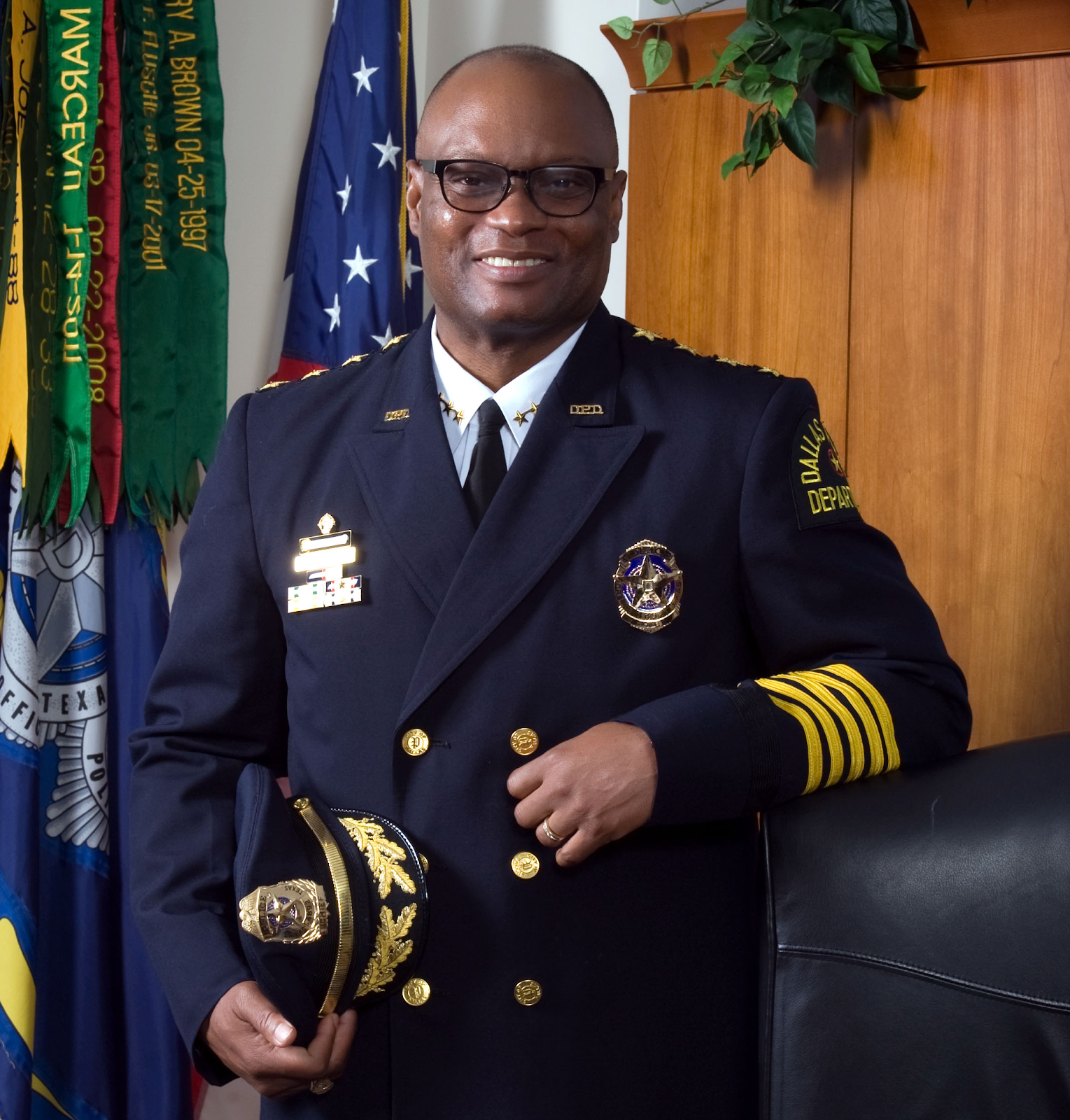
Crime is the key blow against Lightfoot and Vallas like others has also said that he would fire Chicago Police Superintendent, David Brown, Lightfoot’s handpicked police chief who in his early days showed, to some, a naivety, especially in the aftermath of the riots that piggybacked onto the peaceful protests that followed the murder of George Floyd.


His track record is not bright and as Block Club Chicago reported, “In the 2019 mayoral race, Vallas got 5 percent of the vote. He also unsuccessfully ran for Illinois governor in 2002 and lieutenant governor in 2014 with then-Gov. Pat Quinn.”


Taking tack for a candidacy is State Rep Kam Buckner, a spry 37 year old whose diverse 26th District looks like Chicago he has stated, ““The district looks a lot like Chicago,” Buckner said. “… Being in that role has been incredibly telling to me. It’s given me a very clear view into what happens when we have a tale of two cities — what happens when we have robust investment on one hand, and robust disinvestment or benign neglect on the other hand.”


An attorney, he has also worked for Sen. Dick Durbin who gave him some wind in his sails, but in another interview with Block Club Chicago he emphasized. ““We have to find a way to celebrate the places and spaces that we occupy — their diversity, their importance, their significance — but more importantly, the people who live there,”


This is a populist stance, and also alludes to the historic racial segregation in Chicago, but will it be enough, critics ask.

Some also wonder about his past bouts with alcoholism and driving under the influence, but he has affirmed his sobriety by saying, ““In being honest with myself, my God, my family and my friends and my constituents about this, I have arrived on the other side of this a better man, a better father, a better partner and a better public servant, "and added, “There are many things that have changed since these incidents occurred.”


Taking a tough stance, the response from City Hall was this: “Being mayor of Chicago requires the sort of toughness that Kam Buckner hasn't shown in his public life. When others stood up to Madigan and told him it was time to go, Buckner voted to keep him in power. You can’t take on the machine when you’re part of it,” Lightfoot campaign spokesperson Christina Freundlich said in a statement.


His efforts at World Sport Chicago, which he headed in the failed aftermath of Chicago securing the Olympics, proved to be sketchy with some saying that financial contributions declined as his salary soared, while others attribute the loss to the departure of his predecessor Scott Meyers.


What is significant is that Buckner has attributed this organization as part of his past accomplishment and WBEZ summed it up neatly, by saying, “He announced his campaign in May with a “four star” plan that includes “safety and justice,” improved education, economic recovery — as well as stabilizing the city’s long-troubled finances. In his campaign literature, [and] he has touted his time at World Sport Chicago, saying he brought sports to 70,000 students.


Donations and the budget shrank rapidly, they reported, and now spokespeople for the Buckner campaign say that this was by design. This belies assertions that, “To fund that programming, the organization was relying on the lump sum of leftover Olympic money that inevitably decreased year over year. But, under Myers, WSC was also raking in more than $1 million a year in grants and contributions from places such as the MacArthur Foundation, which donated $1,375,000 between 2009 and 2014, to sustain its programming for kids.”


While the waters appear muddied, the past for politicians can come forth to become a nuisance, and whether this will be the case, remains to be seen. But, questions related to whether his salary was outsized according to geographic norms for non profit directors at that time, when the evidence was produced seems to be buried, raising more unwanted questions for a candidate that has an impressive resume.


Coming on strong is another fierce Lightfoot critic Ja’Mal Green, a 27 year old firebrand who has run before, and lost to her, labeling her as incompetent and amidst other invective, a milder rebuke, “This city is in huge disarray!”

In April 2021 Green sent a tweet Green sent a Tweet in April 2021 declaring that “Lightfoot is resigning tomorrow in a stunning end to her mayorship,” turning rumors that were circulating on social media into a political firestorm, reported WTTW.


In response, Lightfoot called his action, “homophobic, racist and misogynistic.”


While this tweet, in hindsight was ill conceived, as well as ill advised, it’s also possible to see that his youthful impulsiveness, as well as a reputation as a l’enfant terrible, could harm his future intentions.


Case in point, shortly after that tweet, WTTW reported that “A month later, Green disrupted a news conference held by Lightfoot to blast her for blocking his effort to build a $15 million youth center on the site of the former Garrett Morgan Elementary School in Auburn-Gresham, which was closed by former Mayor Rahm Emanuel.”


That being said, his association as an acolyte to Bernie Sanders might enhance his resume for progressive voters.


Coming on strong is Jesus "Chuy" Garcia whose late entry has some questioning his wisdom, and that losing the CTU endorsement might hurt him.


Garcia has been in this game before, in 2015, when he was a candidate, running against Rahm Emanuel, and whose last minute endorsement of then candidate Lori Lightfoot, propelled her candidacy and she won the election, Now, with an “anyone but Lightfoot” mantra, older faces are as welcome as new ones, and Garcia, recently re-elected to Congress has a hand in the fire of bruising Chicago politics, where character assassination and dirt digging are only the beginning.


Garcia's avuncular profile might avoid him some of the most serious blows, but he has some baggage, mainly that he endorsed the recently sullied former Speaker of the House, Mike Madigan, whose pay to play with a local utility company has Garcia tagged by some as part of the machine.


If the crowded field for Chicago mayoral candidates looks a bit like the Wild Wild West, then the analogy may fit even more as the elections grow closer.


Updated Nov. 29, 2022, CSDT


Tuesday, May 10, 2022

Crime on CTA threatens Lightfoot reelection campaign


The burgeoning crime on Chicago's famed El trains, as well as its buses are threatening to be as much a political issue for the beleaguered mayor, Lori Lightfoot, as snow was for former Mayor Bilandic, when he was unseated by mayoral candidate Jane Byrne, as the snow piled on city streets engulfing the city, and stranded motorists, bringing the city to a standstill.

While crime was has not been unknown on the system, the nation’s second largest, in the last several months, it  has increased to an annual increase of 17 percent, and with the recent attack on local WTTW TV host Will Clinger, the attention has come at a time when many businesses are encouraging at least a partial return to offices in the city's business section, the Loop, as well as an increase in business, as employers have ramped up both production and a growing need for workers. 


Many of those workers, especially in a city where car ownership is a luxury, and many low and middle income income workers depend on public transportation, to get to and from work.


While some have suggested that armed police are the answer, others have said that this would be a detriment to the homeless population who depend on it for overnight shelter, while others cite the problem of racial profiling; and, while the mayor and police superintendent, David Brown, have announced a partnership with unarmed guards, trained to deescalate tense situations, others have pooh poohed the idea as unworkable.


There have been long standing issues with crime on CTA trains, for years, but now it has also spread to buses, where last summer, a man riding in broad daylight on a bus, in the River North area, (a gentrified neighborhood), was stabbed by a woman, later determined to be mentally ill.


Lightfoot had promised to open the mental health clinics closed by her predecessor, Rahm Emanuel, but this was not done, and private contractors have assumed the work, only in a partial sense, for some, but for many trying to make appointments has resulted in unanswered phones.

Various social service agencies, hampered by the Covid pandemic, have struggled to fill the void, for the willing, but many cases of mentally ill people remain undiagnosed, and out of reach.


Crime on the trains, includes murders, robberies, assaults, including sexual assaults, has escalated with less eyes and ears, due to rider shortage, after the Covid lockdowns, a 50 percent reduction, and those that can work remotely have done so, or the well heeled have driven to appointments, leaving certain populations vulnerable: students, older adults and the working poor.


Many residents are blaming Lightfoot for her perceived inaction to tackle the crime problem, and some have vowed never to vote for her in the next election. And, she recently, and paradoxically said,, “The CTA is safe.”


Theft, of course, seems to be the primary goal, in these assaults, and smartphones, like Clinger’s, can fetch $200 on the average, from a disreputable dealer, fencing stolen goods. And, in his case, they are often accompanied by accomplices who can intervene, or help in the attacks with broken bottles, pipes, and fists, and as he stated in later interviews, were also present, while he persued the perpetrator.


He was hit in the head, and has subsequently suffered intracranial bleeding.


While the problem is mainly seen on the Red Line, the Blue Line, the lead  path to and from the city, via O’Hare airport has also seen its share of crime.  While many erroneously blame the homeless for the problem, they too are often victimized, when they just want to sleep for a few hours, and avoid shelters that are often violent, even if they are open, and have beds.


The situation has intensified to the point where Sen. Dick Durbin (D) of Illinois and US Rep Jesus “Chuy” Garcia wrote a letter to the CTA, and they said, in part:


“While we appreciate the efforts that both the CTA and Chicago Police Department recently have made to increase passenger and employee safety on trains and buses throughout the CTA’s network, more needs to be done to protect CTA’s frontline workers and passengers given the alarming increase in crime on the CTA system,”


A local station, ABC 7, reported their response, "saying the safety and security of CTA customers and employees is its number one priority,”. that many viewers felt was inadequate, as well as evasive.


Brown, widely criticized for his handling of the city’s racial protests, following the murder of George Floyd, said on Monday, “"We still need to add more resources to our downtown to our CTA as well as to all of our city" 


Lightfoot had also noted, at the same time, that, “Though we are proud to have one of the best transit systems in the country, that reputation and everything we're doing to keep it will mean nothing if CTA customers don't feel safe taking public transportation," and,  "Violence on our transit system must end, as people shouldn't have to fear for their lives when they're commuting around our city. This partnership between CTA and CPD will help to protect them and contribute greatly to our citywide mission to create a safer Chicago."


Things then went from bad to worse when on the far North Side, at the Granville station, a train conductor was pushed overboard, and onto the tracks, by a passenger claiming that he had dropped his phone on the tracks. Shocking as it was, there was also shock as it happened out of the hotspot of the Loop, where much of the CTA crime has occurred, notably the Roosevelt stop.


Block Club Chicago noted the fears of CTA workers when they reported one of the workers who said, of the perps,“They say, ‘I’m going to kill you,’ ‘I’m going to shoot you,’ ‘I’m going to stab you.’ All the time,” said the employee, who has been with the CTA for over 20 years. “I’m leaving in a few years, but the way things are set up right now, I don’t know if I will get out of here alive. That’s just how bad it is.”


Taking a look at some of the recent train related numbers, we can see 205 in the Loop, 61, in the River North [double check this], 40 in Roseland, and 32 in Rogers Park, to name but a few.


While Chicago is not often thought of as a college town, it is the home of the University of Chicago, Roosevelt University, The University  of Illinois at Chicago, the City Colleges of Chicago, whose students often use the CTA, and DePaul University, whose Lincoln Park campus abuts the Red line at the Fullerton stop has now faced a dilemma.


The DePaul student, paper in its online forum noted the increase of CTA crime, they also reported that, "Further findings discovered that 45 of these 285 crimes occurred in the immediate vicinity of DePaul campuses, taking place on the Fullerton platform, Jackson station and platforms and trains at either location”


The school has two campuses, one near Fullerton, and the other, downtown, near Jackson.


“The 45 occurrences at these locations are up 165 percent from the 17 reported during this period in 2020. This surge comes as no surprise to DePaul students who regularly feel uneasy commuting aboard the CTA.


“There’s always something going on,” said sophomore Gabby Iwanska. “I’m a girl in the city, and [safety] is always on our minds. I know a lot of my female friends refuse to even ride the Red Line.”