Thursday, April 6, 2023

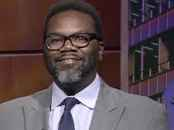
Johnson win as Chicago mayor is a game changer


Tuesday’s mayoral election in Chicago proved to be a watershed for Brandon Johnson, a virtually unknown Cook County Commissioner,who kept his head down and did his work, and in the space of a few short months, became one of two candidates in a runoff election between he and former Chicago Police Schools Superintendent Paul Vallas, in a race that had increasing violence and crime as the top issue, but also, despite a razor thin win brought Johnson out of the shadows to not only emerge victorious, but also as the progressive leader of a new era that has surpassed the old guard pols of yesterday dominated by the Irish American ascendancy, notably led by the Daley’s, both father Richard J, and son Richard M.

Election Day provided a steady share of morning rainstorms that might have kept some voters at home and the final tally of voters came to 35 percent, which as ABC 7 reported, that figure was only a third of registered voters. In that report some interviewed, who did not vote, said they were “just too busy”, or “I just didn’t no particular reason. . ..”


In that same report the Chicago Board of Elections says once all mail in ballots are counted, that figure could rise to 37, or 38 percent. But, what might have led to a Johnson win was the increased voting among 18 to 24 year old voters, and spokesperson Max Bever said, “They added 5,000 votes. That is a big percentage point jump compared to the February election.”


Despite the low turnout in some predominantly Black and Latino wards, with historically low turnouts, the Johnson victory, as an old saying goes: a win is still a win. And, while Johnson cannot claim a mandate, the paradigm shift is one that portends a greater trend across the nation, as evidenced by support from Sens. Elizabeth Warren, and Bernie Sanders, whose endorsements gave a national focus to the campaign.


It also shores up new wins on the aldermanic level, both with incumbents such as Marian Hadden of the 49th Ward, as well as Alderwoman elect of Ward 48, Leni Manaa Hoppenworth, who beat old school rival Joe Dunne, by 600 votes despite Dunne’s refusal to concede waiting for mail in and absentee ballots, but with the removal of his campaign signs in the ward, that might provide a concession of its own.


For Democrats across the country, this win also shows that progressive candidates can win, despite some of the more conservative tropes about those candidates being soft on crime, or wanting to defund the police, both of which were used against Johnson.


The new mayor will subsequently face a far more progressive city council, than before and as Manaa Hoppenworth told listeners in a candidate forum, and to Block Club Chicago, “she’s excited to work with amore progressive City Council and to work on providing more affordable housing and mental health support to Chicagoans.”


In that vein we spoke with Saqib Bhatti, the co executive director of Action Center on Race and the Economy, in a telephone interview, following up on his remarks from a press statement where he noted, “we believe that the people of Chicago have spoken loudly and clearly in this election, voting for a candidate who supports unions, higher taxes on corporations, and a vision of public safety that is not solely dependent on law enforcement.”


Bhatti said that key to the Johnson victory was “because he really had a worldview [of the city] that “you win by listening to people, and that what we saw was the fighting back against the neo liberals by those in the Black and brown communities.”


Asked about the national outlook for Democratic candidates he said, “It shows you don’t have to run to the right of your opponent, but listen to what people are telling you. The future for Democrats is to open those spaces to win because of our values.”


Bhatti emphasized that part of that winning formula was “the strong GOTV [get out the vote] operation led by United Working Families , and with each election cycle we are learning more and more."


For the effect on the incoming city council, he said, “today as progressives, we can open up space to the left and moderate that effect to increase room for progressive policies, with the help of Brandon on the fifth floor, and consolidate in partnering with ways to respond to constituents, and listen to the people, and not on special interests or developers.”


The beginning of a new day for Chicago.


Updated with a correction on 4.8.23  at 12:38 p.m. CDT

Friday, March 17, 2023

Showdown for Vallas and Johnson for Chicago mayor

It’s a mere stones throw till the April 4 runoff election between Former CPS School Superintendent Paul Vallas and Cook County Commissioner Brandon Johnson in what promises to show not just the top issues of crime and education in Chicago but the racial divisions in this long segregated city, with many whites following the Vallas trope of “law and order” and the a broader based coalition that has gathered around Johnson with his Black and Brown backers, but also heralds greater support from the so called Lakefront Liberals gathered on the North Side of the city.

A recent poll by Chicago based Victory Research dived into the details of support for both candidates showing the tight race with 44.9 percent for Vallas and 39.1 for Johnson, with 16 percent undecided. But, that also shows some telling endorsements with Ald. Ray Lopez of the 15th ward supporting Vallas (true to his tough on crime stance) and Matt O’Shea of the 19th for Vallas; indeed, the Irish American community with the long reign of Richard Daley and his son, is seemingly bent on seeing their support for traditions of old, represented by Vallas, even if he is Greek American.


With the election of 35 elected police district council people, they have taken the other side of the coin, from middle and lower income communities and thrown unanimous support to Johnson, showing their suspicion of the Vallas trope, and his support from some right wing figures such as the Fraternal Order of Police Lodge 7 president, John Cantanzarra.


Johnson has fought back against charges that he wants to defund the police, a tag hung nationally on Democrats, and talked about taking a holistic approach to examining the root causes of crime, be it housing, employment, and the like.


Taking an even closer look the poll revealed that 58.4 percent of progressives have shown support for Johnson, favoring that progressive approach to crime fighting, but in sharp contrast to those smaller numbers, from the same group for Vallas, 21.92 percent.


Along racial lines African Americans polled 63 percent for Johnson and 29 for Vallas, along with 61 percent for Vallas among whites, with about an even division among Latinos, who have shown low historical turnouts in previous races.


Geographically, Vallas dominates on the Northwest and Southwest sides of the city and Johnson on the South and West Sides, along ethnic and racial lines. And, for age demographic, Vallas captured more than 15 percent of voters over 60 years old, and Johnson in the 30s, 40s and 50s.


This past week has shown the two candidates crisscrossing the city in a series of forums, and debates, beginning with last Saturdays candidate forum by Chicago Women Take Action Alliance, and moderated by Cheryl Corley of NPR and local progressive radio WCPT host Joan Esposito, where both gave some contrasting responses to hot button issues, and showed what political consultant, and advisor to former president Barack Obama, Dave Axelrod called Johnson’s “big personality”, and, as he gave strong answers with statistics, it showed a relatively weakened Vallas who stood on his “law and order stance” and while he hit some punch lines, he never seemed to drill down the way Johnson did.


To wit: “The city is in crisis, [with] a degraded demoralized police department, the problem is on the 5th floor [of city hall], seemingly forgetting that Lightfoot was defeated,and while this might appeal to the Lightfoot haters, it seems to have been a tag line from an earlier speech, and not one pertinent to the current situation.


Contrast this with Johnson who said that he had a “dynamic interest in this city’s history” and that “we need to build a stronger and safer one.”


To which Vallas countered that with the “problems of the city, [we have to] build something better and brighter.”


It’s apparent to many that for Chicago, and other cities of comparable size, that public safety and education, quality education, are paramount, and with the backing of both the FOP and the Chicago Teachers Union, for both Vallas and Johnson these are front burner issues for voters, and the community at large.


Vallas has called for increasing police as a seeming mandate, and to also recall retired officers to stem the tide of those who have retired, or moved to other states, but Johnson countered that the plan was unworkable since it would take time for both to get up to speed, at least two years, by his research.


Vallas also wants the return of beat cops to neighborhood patrols, something that our research has shown to be given a mixed reaction by  residents, thinking that the old model had shortcomings, and that a return to the “officer friendly” model for aging baby boomers may have had its day.


In another forum at the University of Illinois at Chicago, organized by some anti violence groups on Tuesday Vallas again called for “community based policing” perhaps a nod to beat cops, but Johnson has said, accurately, that police officers cannot do it all, and that there is a role for social workers counselors, and the like, because to not do otherwise is a “recipe for disaster.”


At both forums Johnson had to clarify earlier remarks from a 2020 radio interview that defunding the police as an “actual, real, political goal,” not just a slogan as The Chicago Sun Times reported, and he replied at UIC that “it was a political goal, I never said it was mine.”


In an awkward moment for Vallas at UIC, he was questioned by former Chicago Tribune columnist, Eric Zorn by what he meant by “take the handcuffs off police” and that it might provoke some resident anger, and legal issues for the city.


Vallas said that his statement was a mischaracterization, and that “the bottom line is I have talked about restoring proactive policing that is consistent with the consent decree, and I’ve said that over and over again.”


He later backtracked to reiterate that proactive policing to meet the demands of the consent decree was what has consistently wanted but, as any trial lawyer knows what the jury heard, even if overruled, they heard, and the fact check was what forum listeners heard.


A later fact check revealed that he had actually told the Sun Times that, “police officers we do have are demoralized and handcuffed. There is no incentive to engage in proactive policing. And the criminals know it, and they’ve become bolder. There is an utter breakdown of law and order.”


He also ridiculed Johnson’s goal of hiring 200 detectives to aid police to solve crime, and that it’s “not going to solve the problem of crime in Chicago.”  Johnson replied, “So, having detectives to solve crime doesn’t solve crime in Chicago.”


They also heard Vallas say that if elected he would go beyond getting back to pre covid murders as progress, but instead, “if I don’t get us under 500 murders a year, then I will have been a failure [as mayor].”


Chicago had 695 homicides in 2022 and 804 in 2021, according to CPD, “up sharply from 500 in 2019 before the COVID 19 pandemic,” reported Block Club Chicago.


Rounding out the week was Thursday’s televised debate on local ABC affiliate, where the Sun TImes reported Vallas took the gloves off in an often spirited debate, perhaps because the of the latest Johnson endorsements: Chuy Garcia, his earlier rival, Illinois Attorney General, Kwame Raoul, and on the national level, Sen, Elizabeth Warren, of Massachusetts, and Bernie Sanders of Vermont, and On Friday, longtime civil rights leader, The Rev. Jesse L. Jackson, Sr.


Right out of the gate, Vallas, once again, told Johnson he wanted to defund the police, and Johnson defended his record saying that was a political goal and not his own.


On stronger ground with a return volley, he added that 40 percent of all 911 calls are related to mental health, and that the police are “asked to do their job, and somebody else,” 


He had earlier noted, at the CWTA forum, that “200 calls each night” are for women suffering domestic violence.


Called smart policing, Johnson has used this fact, to which Vallas has said, “smart policing is not defunding the police,” but at this point it seemed like a shopworn line, and the expression on Johnson’s face seemed to reveal the same feeling.


In a retort, he noted that it takes two years to train police and put them on the streets, and that “we need police now.”


Vallas met that by saying that it would only take 6 months, incredulous to many viewers, and that it, seemingly “would improve morale,and that police officers will return, and can be counter on, and not be punished when they make arrests.”


Sometimes all roads in local politics, as well as national come down to money, and Johnson stated that he was the only one on the stage who had a budget, but Vallas accused him of wanting to raise property taxes to $800 million, and that the tax on hotels and motels was unfair to which Johnson replied he was looking at a dollar a room, and that even his own frugal father could come up with a dollar.


Vallas did mention, accurately enough, that Tax Increment Financing monies should be used to improve lower income neighborhoods such as Little Village, and while true enough, as was their intent, the financial distribution, has often been used to prop up high income venues, such as the French Market, hardly in an impoverished area.


Helping in those areas, and beyond is his support for Bring Chicago Home, a proposal to raise the real estate transfer tax to increase affordable housing and to end homelessness in the city, which Johnson said was a population of “20,000 unhoused people.”


Vallas touted his budget record in Chicago schools, as well as that in New Orleans and Philadelphia, but the appearance of New Orleans and Philadelphia officials, and a spate of reports and articles belie that claim. One of them, ACRE Action Center stated that when he was CEO at CPS, he “started a pattern of skipping pension payments, which ultimately led the Chicago Teachers Pension Fund to go from being fully funded to having a $9.6 billion shortfall.”


For Philadelphia, the report stated that the Vallas leadership “took out a series of toxic swap deals, which ultimately cost Philadelphia Taxpayers more than $161 million.”


Chicago has the nation’s third largest school system, and one of the major issues for both candidates, and for previous mayors, is how to harness the best financing for each student and to keep the quality high, and support needed wrap-around services such as tutors, librarians and social workers. 


As the system has changed over the last few decades, with control given to the mayor, the school population is now mostly Black and brown, and much of the will to improve is compromised by race.


The funding formula is mostly dependent on property taxes, and while the formula has changed, the needs and costs have increased. Vallas has often said that he wants the money pushed down, his term, “to the school level”, but has been vague on how to do this.  And, as the records have proved in both New Orleans and Philadelphia, most of his success was done with charter schools, at least for a while, and he has, in some older interviews suggested that he is a supporter of school choice, read as vouchers, something critics say whose ultimate goal is to destroy the American public school system.


Even more damaging is his alignment with the Illinois Federation for Children PAC, and a $59, 385 contribution from former Trump Education Secretary Betsy DeVos, a staunch advocate of school choice, and vouchers, and as American Federation of Teachers President Randi Weingarten, a Johnson supporter has said, “I don’t care what he [Vallas] says, for Betsy DeVos and her PAC to come in and support Paul Vallas tells you everything you need to know about him.”


In a subsequent debate with WBEZ radio Vallas denied having any contact with DeVos, yet the two did serve together as host s at at an event in conjunction with the Urban League of Chicago honoring the superintendent of Chicago Catholic schools.reported the Network of Public Education.


Johnson has direct classroom experience as a teacher, and this lived experience gives him more credibility in the eyes of many voters and his design for a more holistic approach for funding and accessibility.


For many progressives, Vallas’s statements to the right-leaning, Wirepoints, during a podcast in November of 2021, appears not only insensitive to the hot button subject of Critical Race Theory, which is not taught in elementary or high schools, and also racist.  Here are excerpts:


“Critical Race Theory - or call it whatever you want, woke-ism, anti-racism . . .nut number one, when it distracts from quality instruction in the core subject areas - which it is, because we seem to be too preoccupied, too much focusing on these things, rather than focus on a core curriculum - our standards suffer and damage is done.”


Vallas also states that CRT, “further undermines the relationship of children with their parents.” And, when the host of the podcast attempts to link CRT with criminal behavior, Vallas says, “You’re absolutely right,” and that it’s “a justification for everything.”


Stay tuned.


Updated April 4, 2023 at 1:15 CDT


Monday, February 27, 2023

Chicago mayoral election showdown is here


Tuesday is Chicago’s municipal election day, and at the top of the ticket is the run for mayor, and this top job is in the minds of most voters, especially with the incumbent Lori Lightfoot facing a field of eight other candidates, and while many polls have zigged and zagged depending on the day, most residents are feeling that with this many candidates there is the definite possibility of a runoff election in April; and as dictated by law, if no candidate gets more than 50 percent of the vote, a runoff is automatically triggered.

Lightfoot has become wildly unpopular with many residents in her weakened efforts to battle crime, with criticism from both conservatives and progressives, whether it was dealing with the pandemic and covid restrictions (closing gyms, and other recreational facilities) earned her the enmity of some business owners, who eventually flouted mask rules and capacity limitations,


She has received the most criticism towards the increase in violent crime, that included street robberies, car jackings, and most of all, regular violence on the city’s famous El trains, the Red Line, in particular, where robberies, stabbings, beatings and other violent forms of assault became the norm.


Lightfoot’s hand picked police department chief David Brown, has been criticized for a lackluster response since his early days when the city dealt with protestors that tagged onto the peaceful demonstrations, and posh Michigan Avenue stores were looted, often in full sight of the police and television cameras.


Crime has become the central issue for most voters and there is frustration from many quarters, not only on the uneven response, but, as Live Free Chicago noted, the clearance rate for solving crimes by police is 21.7 percent in Black neighborhoods, and 45.6 percent in white areas.


Chicago public schools have also raised ire, and concern, by many who see decreased enrollment but greater demands for money, and in some cases new school buildings.


The mayor from her early days in office has battled the powerful Chicago Teachers Union, in what could be frankly seen as a mortal combat, and in fact one recent school superintdent quit, in virtual disgust at her dealings with CTU.


These two issues have become paramount in the minds of voters along with twinned issues of  police accountability, with the most glaring news of a policeman who was part of the Jan.6th Capitol insurrection, as a member of the now infamous Proud Boys, but who was only given a suspension by Brown; and joined by reports that both elementary and high school students not being able to read, or do math, at grade levels.


Lightfoots closest rival is Paul Vallas, a former CPS head, who some say “messed” up the schools, only to flee the city. He has garnered significant support from the Fraternal Order of Police, and he is running on a strict law and order platform, but his association with that organization and especially John Catanzarra, a former chief who has made questionable comments that some listeners associated with racism, while others praised him a voice for the police, and many residents, wrongfully have said that the mayor wants to defund the police, but in fact has given them the highest raise of many of her predecessors, but this seems as the saying says, all is fair in love and war, and this seems to be war.


Vallas has made questionable remarks in the past, many recorded, on whether he is truly a Democrat, or a Republican, with past statements saying he would run as a Republican in this blue city, after a previous loss as mayor.


As the only white candidate in a long segregated city, he has also earned the support of traditional white ethnic communities such as the Irish, Polish and German, and the somewhat relatively unknown, but powerful Greek American community, of which he is a member.


This pits him against the Black communities as they have faced a long history of police brutality under former Chicago Police Department Commander John Burch, who coordinated tortures of Black male prisoners, and the later shooting of Laquan McDonald in 2014, by CDP officer Jason Van Dyke.


Race is never far from the surface in American life, and running against a Black woman, as the only white candidate, makes many Black voters wary and his statements about taking the city back caused Lightfoot to say that he was “blowing the ultimate dog whistle, saying: “Take our city back, meaning what? To what time? And take our city back from whom?”


She also referenced Republican Bernie Epton who ran against Harold Washington, the city’s first Black mayor, in 1983, in a volatile racially tinged election, on a slogan of: “Vote for Epton before it is too late.”


Progressives have railed against his anti abortion stance, which he says is personal, and based on his Greek Orthodox faith, and previous statements about the teaching of Black history, that he conflates with Critical Race Theory, which is not taught in elementary and high schools. 


Next up as a top contender is former Cook County Commissioner, and member of Congress, Jesus “Chuy” Garcia, whose late entry into the race caused some consternation among local political observers.


While long considered the favorite of the CTU they abandoned their support, and while he did gain support from other elected officials, such as Jan Schakowsy,and Mike Quigley, both members of Congress, and some local trade unions including Teamsters 705, and 727, but the plum endorsement evaporated, and critics said he seemed more like Lightfoot, the death knell for the undecided which are currently 19 percent.


Veteran political speechwriter Jason DeSanto told local PBS station, WTTW, that in addition to late TV ads, and a weakened position that he “had a muddled message,” and that his strong base of support was among the Latino community, “But he really has not done a very good job of expanding beyond that base and really articulating a clear message as to what he stands for with respect to other communities.”


His early repeated references to working with Harold Washington have all but disappeared after a press release questioned the relationship, without specifically naming Garcia.


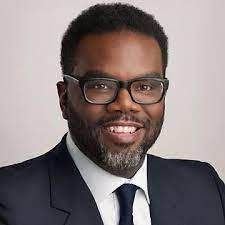
Surging in the polls is Cook County Commissioner Brandon Johnson, whose youth and creative positions on crime, police accountability, and education (as a former teacher) has galvanized Black voters and has resulted in Lightfoot saying that she is the only candidate of choice for Black residents, and has accused, Johnson, falsely, of wanting to defund the police.


What he wants to do is take some of the money from the police budget to harness violence prevention and social services to the South and West sides. And, he has spoken of his lived experiences, as a Black man living on the West Side, facing the issues that many of his constituents have.


Blacks make up 29 percent of the total population of Chicago.


David Axelrod, political analyst, who propelled Barack Obama to the presidency has told the Sun Times that Lightfoot has a “steep, steep hill to climb” and that the two top contenders could be Vallas and Johnson, and that the latter coming from the position of being an unknown would be a significant push aided by his “big personality.”


A recent poll by M3 Strategies had Vallas at 32 percent, and Johnson at 18 percent and growing, but that is changing, but beyond the polls the confluence of crime, and weakened public education are primary and who can show they have the grasp of those vital issues is the winner.


Saturday, January 21, 2023

48th Ward candidates present a united front

With the exodus of nearly one third of  Chicago Alderman, candidates for vacancies are racing across the political landscape to try and secure roles that many thought of, but assumed were not going to be open, even on a far horizon. One of those was the 48th Ward where Harry Osterman was in power since, and before that it was his mother Kathy Osterman, whose power saved the Chicago Armory where the event was held from demolition, and its later use by the Chicago Park District.

Ten candidates appeared at last Saturday’s forum displaying a wide range of skill sets, professional roles, and education, and displaying a string sense of collegiality in a format designed to distinguish themselves for the voter, and, in this case, the turnout was massive, quickly becoming standing room only, and the mostly white crowd, visibly roused, gave the forum the air of a pep rally, especially the supporters of Joe Dunne, who turned out in legions, but not to be outdone by the equally vocal Leni Manaa-Hoppenworth supporters.


The current list is Joe Dunne, Leni Manaa-Hoppenworth, Larry Svabek, Nassir Faulkner, Brian J. Haag, Andre Peloquin, Andy Peters, Isaac Freilich Jones, Roxanne Volkmann, and Nick Ward


Organizers focused on three key areas of interest for the ward which encompasses Edgewater, Uptown, and parts of Andersonville: Economic Development, Public Safety and Transportation.


This was near catnip for several of the candidates, who own, or have owned area businesses, and who have often felt the loss of foot traffic as vacant building after vacant building has erupted, especially on Bryn Mawr Avenue.


There was widespread agreement that tax breaks given to property owners with vacant storefronts should be capped, something that Cook County Assessor Fritz Kaegi has proposed beginning in January of 2023.


Among them were Isaac Freilich Jones, Brian Haag, Roxanne Volkmann, and Leni Manaa Hoppenworth, in agreement along with Nassir Faulkner and Nick Ward.


A long standing issue this was first seen in the South Shore neighborhood as a solution to perceived urban blight that not only as an eyesore but also as a disencouragement to new business development.


Two years ago Block Club Chicago reported that, “To ensure the tax relief change is cemented long term, chamber of commerce and business leaders have proposed a county ordinance to cap the frequency a property can receive the vacancy tax break at three times every 10 years. If passed, it would go into effect in January 2023.”


These long term tax breaks have allowed owners of vacant properties to deliberately allow them to endlessly remain vacant, an apparent reference to the Bryn Mawr corridor.


Conjoined to this was the issue of public safety, as a lack of business, equals a lack of foot traffic and can be seen as a drawing card for violent encounters.


Not on the agenda, but favored by all ten of the candidates, both in their opening speeches, andlater in the session was the lack of affordable housing, and they all saw this as an impediment to not only commercial growth but also the viability of the neighborhood and that Chicago Housing Authority should be tasked with building more, and targeted to not selling land for recreational use.


Of particular note was Manaa Hoppenworth who noted that not only should there be housing but also supportive services to increase opportunities for all.


Dunne seconded that and noted his prior work as an affordable housing developer, and Ward also added that any of these buildings had to be ADA accessible.


There was some suggestion that affordable housing might solve some of the crime in the neighborhood, but while there is a possible correlation, no bright line has been established, but certainly increasing livability, and affordability is a combination that would contribute to the growth of the neighborhood, as well as increase business and economic development across a wider swath than the Sheridan condo corridor.


Specifically Jones suggested to great applause that Chicago adopt the “Bring Chicago Home” ordinance in which a portion of a one time real estate transfer tax on high end properties, those in excess of $1 million would be used to combat homelessness, a problem for the ward, as it is city wide.


He was supported in this by Ward, and Manaa Hoppenworth, who also wants the process “streamlined, making it quicker and easier for people seeking affordable housing to find a home that fits their needs,” noted her website.


In fact, even with the three specific topic areas that the organizers chose are very much part of city wide efforts to lift Chicago from the many challenges it faces from crime to homelessness, to lack of affordable housing, and maintaining a viable economic life.


Local business owner of "The Green Element”, Haag suggested having more Single Room Occupancy hotels, but in the last decade, most of those, at least on the North Side, have been swallowed whole by developers as market rate micro studios, eliminating what was once a safety valve for low income workers.


The elephant in the room, visibly present, was the rising crime that the city has seen overall, but has also affected the 48th ward with carjackings, muggings, assaults,and CTA incidents.


Suggestions centered mainly on the addition of a traditional beat patrol, whether on foot, or in car, was not clear, but, while there was applause, it seemed that most present felt there should be traditional foot patrol, including Volkman whose son was assaulted, and robbed.


Peloquin noted that he would work with police, but also, and perhaps not, acknowledged by those attendees that the Chicago Police Department has suffered drastic loss among its rank; in fact a recent loss of over 1,000 was heard among some in the local media, but that number has not been verified.


With a wide background of education, business acumen, and passion for the development of the neighborhood it was clear that most present could not have an easy time determining who stood out the most, with the impressive variety presented before them.


Tuesday, November 15, 2022

Concerns over Jesus 'Chuy" Garcia mayoral candidacy

Last week’s announcement that Jesus “Chuy” Garcia would be the 10th mayoral candidate for the 2024 Chicago mayoral campaign brought a  lot of people together at Navy Pier for the news, but the candidate himself took no questions from the media.

As we have noted it’s going to be a slugfest with a crowded field from all corners of the city, from the young to the old, from the wealthy to the poor, and somewhere in between. 


Garcia has been in this game before, in 2015, when he was a candidate, running against Rahm Emanuel, and whose last minute endorsement of then candidate Lori Lightfoot, propelled her candidacy and she won the election, Now, with an “anyone but Lightfoot” mantra, older faces are as welcome as new ones, and Garcia, recently re-elected to Congress has a hand in the fire of bruising Chicago politics, where character assassination and dirt digging are only the beginning. 


Garcia's avuncular profile might avoid him some of the most serious blows, but he has some baggage, mainly that he endorsed the recently sullied former Speaker of the House, Mike Madigan, whose pay to play with a local utility company has Garcia tagged by some as part of the machine.


In 2018, the Sun-Times reported that “Cook County Commissioner Jesus “Chuy” Garcia on Friday issued a glowing review of Mike Madigan as chair of the state Democratic Party — saying he is the “clear choice” and “will turn a statewide majority into progressive action.”

“The progressive stamp of approval comes just days before the 36 state central committeemen and committeewomen prepare to vote for the party chair on Monday in Springfield.”

And it’s not the first time the two have had each other’s backs. Garcia in 2016 endorsed Madigan over a heavily-funded opponent. Garcia, who was named a Bernie Sanders national delegate, appeared in mailers endorsing Madigan.”

Garcia also said, at the time, in the Sun-Times piece, "As a progressive Democrat, it is my intention to support a state party chair who will work with me to advance our most fundamental goals,” Garcia said in a statement released on Friday. “… I will support a chair, who, above all, knows that our goal as a Democratic Party and as a progressive movement must be to build a broad coalition that can deliver this change. Michael Madigan is the clear choice.”

Garcia said Madigan “will turn a statewide majority into progressive action” — and is helping to put a $15 minimum wage on the governor’s desk, fighting to make the wealthy “pay their fair share” and is working to help support a women’s right to choose, among other efforts.

Garcia said Madigan “puts first the interests of the people of Illinois and the progressive principles of the Democratic party.”

While he said that the Madigan endorsement was more of a political move, not a spiritual one, time will tell if voters will accept that assertion, if not irony.


Garcia has also heralded his association with the late Harold Washington, but an advocacy organization sent out a  statement, without naming him, that the bond was not as tight as portrayed, and since then Garcia has tamped that down.


The date chosen for the announcement was also timed to coincide with the 40th anniversary of Washington’s announcement that he would seek the mayor's office.


WTTW reported in a nostalgic vein, said that “García’s election to the Chicago City Council 1986 helped Washington end the so-called Council Wars, and prevent a group of white alderpeople led by now-indicted Ald. Ed Burke (14th Ward) from blocking the mayor’s initiatives and appointments. Washington died in 1987.”


They also noted that “García has served in government at nearly all levels during his nearly half-century career in Illinois politics, including in the General Assembly, Cook County Board and U.S. House of Representatives. García, first elected in 2018 to represent Illinois’ 4th Congressional District, was reelected Tuesday — and it is unclear whether Democrats will continue to control the House.”


One issue that local press has mentioned is his association with city progressives in the council who while somewhat fractious, but not broken, needs mending, and Garcia who in the past has distanced himself from them, will have to work hard to harness their support and votes. But, he has also branded himself as a coalition builder, so this will be a test of these abilities.


He also will have to face the powerful Chicago Teachers Union who on Monday issued support for Brandon Johnson and also, that same day, got the endorsement from the Service Employees International Union, SEIU, giving an edge over Garcia, who some say waited to long to run, and others say that it might throw Johnson’s campaign into chaos; but, time will tell for the latter.


“Johnson welcomed García to the race in a statement that did not mention him by name, and said he looked forward to spirited and engaging discussion among all candidates about the future of our city,” said WTTW.


Race is an issue, and in a town that is often dominated by race, Garcia's Mexican American ancestry gained significant support afterwards but also shows the gains that Latinos have gained city and state wide influence that makes his candidacy notable.


The National Association of Latino Elected and Appointed Officials released in June, ahead of the midterms that there were more than 353,000 Latino ballots in the election.


Chicago has a sizable Mexican population, and one that has grown even further in political influence, and votes, and NALEO has noted that the ballot increase represents a 62.2% increase since 2014.


They are also younger voters with an 18-24 year population “comprising 15 percent of registered Latinos, compared to 7 percent of non-Latinos, Similarly, 25 percent of Latino registered voters are 25-34-year-olds, compared to 16 percent of non-Latinos.”


This gives Garcia an edge, but he may be seen as too old for the youngest of voters, but ethnicity might win them over.


Demographics also show, according to their figures, that  while there was a population decrease in the city from 2010 and 2020, “the state’s Latino population grew from 2 million, to 2.3 million, increasing 15 percent. By comparison, the state's non-Latino population decreased by 3.0 percent,” NALEO added.


The Washington association can be used to attract the Black vote, but with existing divisions and many members of both groups competing for the same jobs, and with differing cultural markers, including religion, that may not be enough.


The current mayor, Lori Lightfoot shot back a sharp retort:, In a statement, Lightfoot's campaign spokesperson Christina Freundlich called García a "career politician" and accused him of "prioritizing his own ambitions" during a time of crisis for Chicago, rather than providing "the tough, principled leadership our city needs.”


"Mr. García spent months dithering on whether to get in this race, saying publicly he’d only run if Democrats lost the House," Freundlich said. "Now, a mere 36 hours after voters reelected him to Congress, and as Republicans prepare to use their new slim majority to strip away our rights, Mr. García is abandoning ship."


The plot thickens when we pull back the camera and see that “Johnson is backed by all of the groups that have been working for nearly a year to unite behind one candidate to challenge Lightfoot.


Splitting a coalition makes it all the more challenging for Johnson, but he has said, “I am both honored and humbled by the broad-based, multiracial and multigenerational support that I continue to receive for my candidacy, "and also that, "My vision remains clear: The people and families of Chicago demand change, and I am the one candidate who can deliver on a safe, equitable and inclusive future for us all.”


Safety is the watchword with drive by shootings, gang violence, car jackings, retail robberies and muggings a near daily occurrence. Adding to the mix is the safety of Chicago’s famous El trains who have become scenes of violent crimes, robberies and beatings as perpetrators rob passengers of smartphones, purses, and anything of value, not just at night but in rush hour, as well.


Garcia offered no specifics on how he would tackle Chicago’s burgeoning crime.


Time is of the essence and being in Congress and running for mayor can be time consuming, and can one short the other?


Local CBS News reported that ,“Volunteers were openly collecting petitions to get Garcia's name on the city ballot in February and passing out pins with his mustache. What's circulating now is how Garcia can run his Chicago race from Washington D.C.?


"He has to just be here as much as possible," said Suzanne Chod, North Central College political science professor.


"I imagine he's going to be in D.C. a lot less than he would otherwise," added Brian Gaines, a political science professor at the University of Illinois.


CBS 2 tapped political science professors Brian Gaines and Suzanne Chod for some perspective.


"The calendar for his current job is actually really good for him to be able to do two things at once," said Chod, who counts 12 legislative days left on the 2022 congressional schedule.


She estimates about two and a half weeks worth of work next year before Chicago voters head to the polls.


"So the timing works really well for this, because on days he has to vote or days he's supposed to be doing committee work, it's only 30 days."


Timing is everything and this time with expectations that the GOP will take the House, that might be, or not be, the best of times, and even the most optimistic tone can change.


Saturday, October 8, 2022

North Side homeless encampment angers residents

On the far North Side of Chicago, a homeless camp of nearly 30 unhoused people have camped out in Touhy Park, angering residents and frustrating Ald. Maria Hadden as she struggles to find a balance between compassion for a group of mostly Blacks, although exact figures are unknown.

Chicago, like many large urban cities, struggles to deal with a burgeoning homeless problem, born from job loss, divorce, spousal abuse and other factors, that seem to be largely ignored by some residents who have mischaracterized the entire group as drug users and abusers, with “lazy bums” being the kindest description.


The resident protests have culminated in accusations of vehicular violence by a local community newspaper columnist, who railed against the perception that she is a racist, suggesting ,to some, that race may be more of a factor than indicated.


There was also a fake 5-day notice with Hadden’s name as signator, that were placed in the belongings of the campers, and posted on the signs in and around the park according to Block Club Chicago, in an apparent effort to dislodge them.


It also stated that they would be housed in an elegant downtown hotel, the Four Seasons indefinitely till Hadden found them “appropriate housing.”


The proposed server was Bill Morton, president of the Rogers Park Chamber of Commerce and a candidate in the upcoming aldermanic election against Hadden.


Sarah Lim, a DePaul university student, claims responsible for the fake notices and says that she and Morton have worked together “on previous political efforts.”


Lim also claims the stunt was designed to drive people to her website for discussion.


Hadden went to the park to tell park residents that the notices were fake, and later stated that many were in tears on hearing the truth.


A recent community meeting convened by Hadden, on Zoom, last Monday, seemed to be more of a referendum on Hadden, than providing solutions to a problem that has ebbed and flowed with some earlier success at housing 64 previous tent dwellers at the park.


Some at that meeting were virulent in their protest to have the police enforce the 11:00 p.m. curfew, and complained of soiled clothing and hypodermic needles littering the area near the park,despite the fact that other residents told us that drug use and sales, had been a long term problem plaguing the neighborhood for decades, especially along Howard Avenue.


In the seemingly effort to enforce resident safety and programing, fieldhouse activities were transferred to nearby Pottawatomie Park, but the phrase, “no good deed goes unpunished” applies here, with residents up in arms over the temporary transfer.


To separate fact from perception we contacted Hadden’s office and reached Leslie Perkins, her chief of staff, to answer some questions about the encampment:


DG: Would you say pending any more partnerships with agencies, the Park District, etc. that keeping the encampment is a temporary measure, albeit unwanted, till a more "permanent" solution is found?


LP: “Our office is scheduling a meeting with the Department of Family Support Services and the Park District to discuss how we can depopulate the park before cold weather sets in. We're faced with an unfortunate reality in Chicago that our shelters are at 98% capacity and that we don't have enough units for people who are unhoused. We have initiated talks with these departments and the Mayor's office to see if we can explore emergency funding to shelter people.” 


DG: What are the approximate ages and races of the tent dwellers? Are their families present, with children?


“To my knowledge, there are no children in the encampment at Touhy Park. I don't have a breakdown of the demographics of the individuals there. We have seen a rotation of people come through the park as people are connected to units and as people become newly unhoused. That being said, statistics have shown that Black men experience homelessness at higher rates than other demographics in the US.” 


DG:Since there are, as well-established high market rate apartments in RP, as well as the city, what assessments are being made to provide even a temporary setup, such as the High Ridge Y. To expand, many are probably not ready for shelter housing, due to drug and/or alcohol use, low, or no income, poor credit history, etc.. So, what can be done, outside of the main objective of affordable housing, and as you know this is an issue for everyone in Chicago?


“The temporary shelters for migrants was made possible with federal emergency funding. Our office has initiated talks with the Office of Budget Management, the Mayor's Office, and DFSS to see if those funds would be available for our homelessness crisis as well. In addition, our office recently wrapped up a community process for North Side Housing to open a men's shelter with 72 beds at Clark and Birchwood. Our community overwhelmingly supported their proposal, with more than 70% of respondents saying they were in favor of the shelter opening at this location 


Our office is also the lead sponsor on the Bring Chicago Home resolution, which would establish a dedicated revenue stream to combatting homelessness. Finally, the city and our partners are committed to a housing first approach to combating homelessness. This means that you work to get someone into stable housing and then provide them with the wraparound services they need, be it mental health care or substance abuse care, to remain in housing. This creates fewer barriers to getting into a unit.” 


DG:It seems that many of the residents are concluding that ALL of the camp residents are drug addicts.


“Our office doesn't have figures on the number of people struggling with substance abuse. That said, there are several factors that can lead to an individual to experience homelessness, and singling out one issue reduces the complexity and nuance of driving factors of homelessness. Unfortunately, our city - along with municipalities across the country - is in the middle of a homelessness crisis.” 


DG:It’s apparent that across the city, there have been many homeless camps over the last several years: underneath the viaduct at Montrose Avenue, near the Kimball and Lawrence underpass, and on the grounds of the Graeme Stewart school in Uptown, and this is only a partial list, so even for a casual observer, the problem can be seen, and Perkins expanded on some of the reasons how people become homeless.


“The Chicago Coalition for the Homeless just issued its 2020 report on homelessness in the city. From 2019 to 2020, we've seen a 12.6% increase in people experiencing homelessness. In 2019, Charles Schwab conducted a survey on savings and found that 59% of respondents at that time were just one paycheck away from experiencing homelessness. And that was in 2019 before the pandemic hit, which brought with it a whole new set of financial challenges for people. Many lost their jobs and fell behind on rent. While rent relief was made available, the demand for funds far exceeded their availability.”


“Now, people are facing skyrocketing costs of living. In Chicago, the average rent for a 750-square-foot apartment is now more than $2,200/month. That's on top of paying more at the gas pump and grocery store due to historic inflation. People are getting squeezed from every direction financially, and it's driving rates of homelessness. Our office has 3-5 people a week come in who are experiencing homelessness for the first time. Our staff is helping people call for housing assessments with the Coordinated Entry System. This isn't something that we saw as much in 2019. And the Economic Roundtable projects that chronic homelessness will only grow by 49% over the next four years in the US if we don't do something to intervene, which is why we're fighting for a dedicated revenue stream for homelessness prevention.” 


DG:Sanitary conditions were brought up repeatedly in the Zoom meeting and especially in the chat area, so are the cleanups, and the porta potties cleaned daily of what is not needed for "living"?


LP:“The port-a-potties are cleaned weekly. We advocated as well for extra staff to help the supervisor clean up the park every day.” 


DG: You seem to have a good relationship with the Parks Dept, can you say the same about the police? (there seemed to be suggestions in chat that you don't) If not, do you see this as an impediment, with this issue, and future ones?


LP:“Our office has a great relationship with Commander Brennan and the 24th District. We communicate with them regularly and bring concerns to their attention when they come through our office. Alderwoman Hadden has regular checks-in with the commander, and we have a staff member who attends every CAPS meeting in our ward. We will continue to work with them on all concerns that come through our office.”


DG: Do you have a deadline --- you mentioned winter as a possible marker -- for a solution?


“Our office would like to see people in units before extremely cold weather sets in. We are going to be meeting with our other city officials in the coming weeks to discuss how we can come up with a plan to depopulate the parks”. 


DG: You referred to federal dollars to help, is this from the mayor's budget or something specific to your aldermanic budget.


LP:“Since the aldermanic discretionary budget is bonded, there are strict restrictions on how it can be spent. This means that money only be spent on capital infrastructure projects, such as street resurfacing. The corporate fund has more flexibility and includes funding for homelessness. As we enter budget season, we will be making this a priority issue. We also would like to see a dedicated revenue stream by passing our Bring Chicago Home resolution."


Chicago has entered a crisis phase, of sorts when it comes to the racial divide, and economic challenges, sorting solutions can be problematic, and how decisions are made on who can do the heavy lifting, has proven to be an enormous task; and, with the combined efforts of who makes decisions, how they are made, and when, makes the task of equity even harder.